Key facts
- China's nuclear clock is six times more stable than Vienna's.
- Both clocks use thorium-229 nuclei embedded in crystals.
- The clocks measure time based on the rhythm of the atom's core.
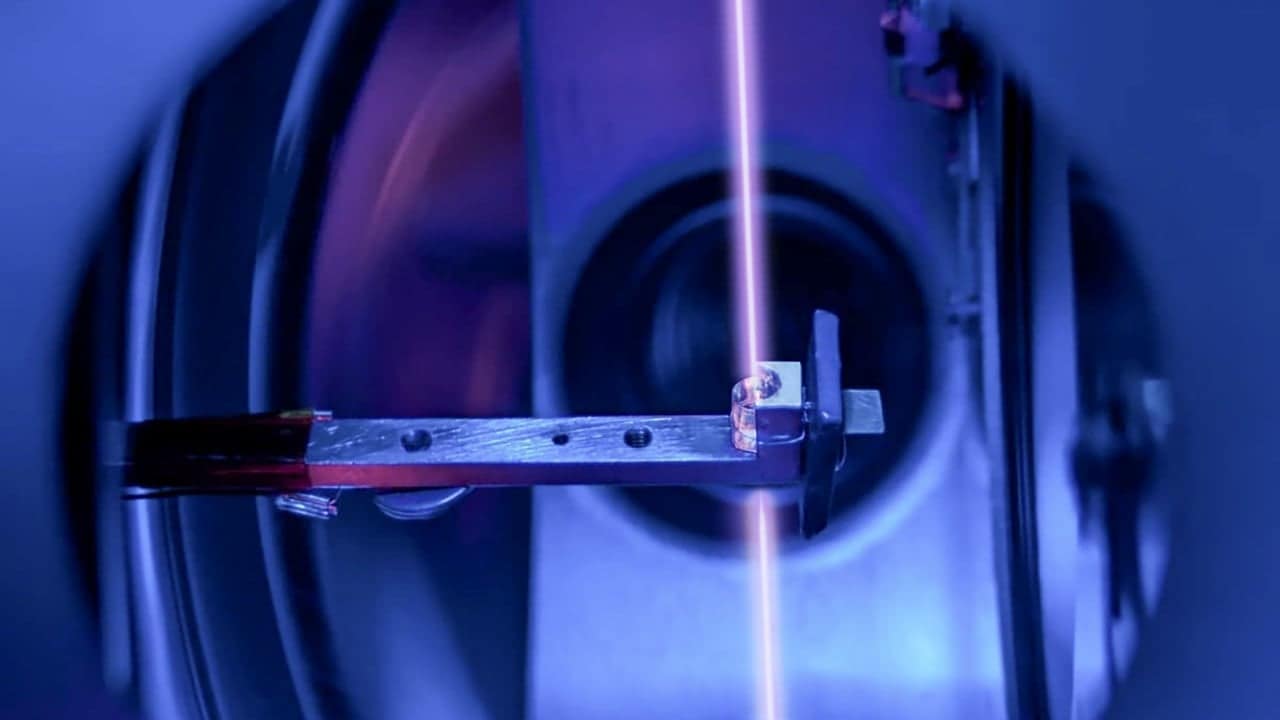
Initial results from the world's first two working nuclear clocks suggest that a device developed in China is approximately six times more stable than a comparable clock in Vienna. Both the Chinese team, led by Tsinghua University, and researchers at Vienna's TU Wien independently developed these clocks. They utilize thorium-229 nuclei embedded within crystals to keep time by measuring the steady rhythm of the atom's core, rather than relying on the electrons that orbit it.
The thorium-229 nuclear transition, identified as a promising candidate for optical nuclear clocks, could potentially surpass current atomic clocks based on electron-shell transitions. These nuclear clocks are expected to be more resilient to external disturbances and offer enhanced sensitivity for testing fundamental physics principles. The thorium-229 clock implemented by the Vienna team, which uses a continuous-wave laser stabilized to the 148 nm nuclear transition, has demonstrated a fractional frequency instability of 3⋅10−12/√τ, approaching 10−15 instability over a day of operation. Future solid-state nuclear clocks are projected to achieve significantly greater instability improvements.