Key facts
- China unveiled GEAIR 2.0, a humanoid robot for crop breeding.
- The robot can autonomously identify flowers, navigate obstacles, and perform hybrid pollination.
China has unveiled GEAIR 2.0, a humanoid robot designed for autonomous crop pollination and breeding. Developed by the Chinese Academy of Sciences, the robot uses AI and gene editing to improve the efficiency of hybrid breeding, aiming to bolster food security and reduce labor demand in agriculture.
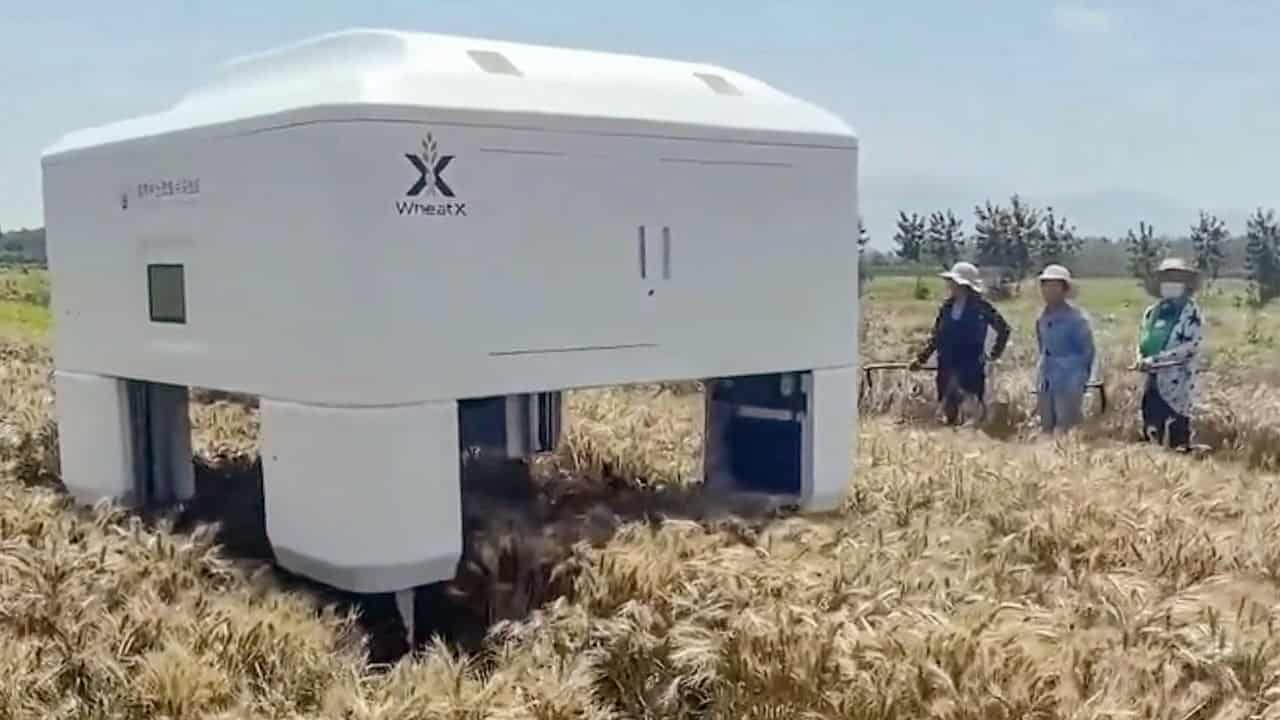
The development of AI-powered robots for crop breeding aims to increase agricultural efficiency and bolster food security by reducing labor demands and accelerating the development of superior crop strains.
China has unveiled GEAIR 2.0, a prototype humanoid robot designed to assist farmers with wheat breeding, marking a significant step in the nation's agricultural technology advancement and efforts to enhance food security. The robot, developed by a team led by Xu Cao at the Institute of Genetics and Developmental Biology of the Chinese Academy of Sciences, was presented at the 33rd China Beijing Seed Industry Conference.
GEAIR 2.0 is described by its developers as the world's first humanoid embodied-intelligence robot for crop breeding. It is capable of autonomously identifying flowers, navigating obstacles, and performing hybrid pollination around the clock. The upgraded version features a dual-arm system, improving its dexterity around plant structures and adapting to changing conditions. Its stigma-recognition accuracy has been enhanced to 92.8% from a previous 85%.
During a demonstration, the robot successfully pollinated tomatoes in less than 10 seconds per instance, with a single dip of its pollination brush supporting approximately 50 pollinations. The technology integrates robotics with biotechnology, utilizing gene editing to create male-sterile plants with exposed stigmas that facilitate robotic access. This "crop-robot co-design" strategy, detailed in a 2025 Cell paper, has also been successfully applied to soybeans, yielding floral traits suitable for robotic pollination.
Researchers highlighted that traditional hybrid pollination is repetitive, physically demanding, and requires completion within narrow time windows. Robots like GEAIR 2.0 can operate for extended periods, adapt to various environmental conditions, and reduce the need for constant human oversight, thereby lowering breeding costs and improving efficiency.
Pick the topics you care about. Get only what matters, on your cadence.