Key facts
- Southern California is facing severe coastal erosion and property damage.
- El Niño, Eastern Pacific cyclones, and climate change are contributing factors.
- Experts warn of potentially more ferocious waves and flooding in the coming months.
- California has declared a state of emergency to prepare for further turmoil.
- Sea levels have risen 8 to 12 inches over the past century, with El Niño potentially adding another 6 to 12 inches.
- A Kelvin wave is expected to reach California in early October, coinciding with king tides.
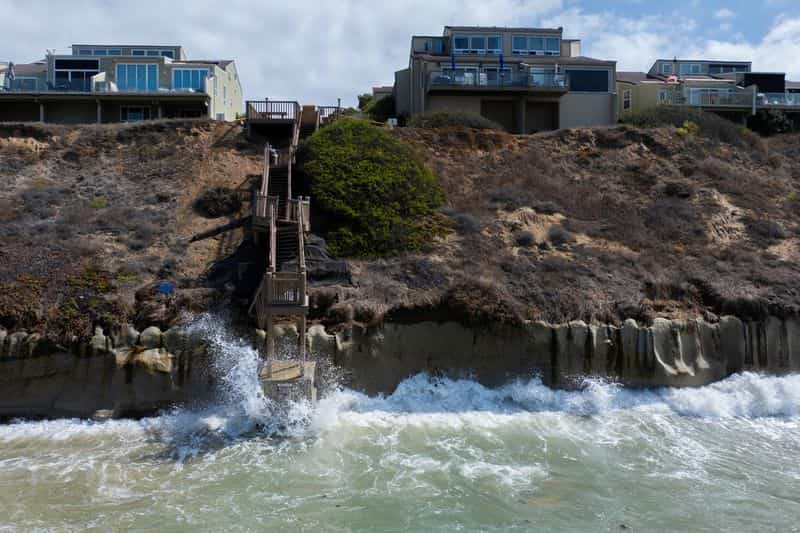
Southern California is experiencing significant coastal erosion and property damage, with experts warning that the situation could worsen in the coming months. A series of Eastern Pacific cyclones and hurricanes, amplified by the El Niño weather phenomenon and long-term climate change, have generated powerful swells that have battered the coast, denuding beaches of sand and damaging homes.
In Malibu, a sinkhole opened near the home of Nicolas Cage, and beachfront properties were affected. In Dana Point, waves destroyed one home and led to the evacuation or restriction of 16 others along Beach Road. The city of Carlsbad has seen Tamarack beach almost entirely disappear, impacting its tourism-dependent budget.
Experts like Patrick Barnard from UC Santa Cruz indicate that conditions are aligning for a potentially severe winter with increased hazards, largely due to climate change amplifying natural weather cycles. Michael Jacox, an oceanographer at NOAA, noted that a Kelvin wave, related to El Niño, is expected to reach California in early October, potentially coinciding with extreme king tides. These events could be further compounded by atmospheric rivers, which often cause flooding and erode coastal bluffs.
California has preemptively declared a state of emergency to facilitate disaster relief and first responder mobilization. The state's sea level has risen 8 to 12 inches over the last century, and a strong El Niño could temporarily increase it by an additional 6 to 12 inches. Coastal geomorphologist Adam Young highlighted that while erosion is a natural process, human development in hazardous areas exacerbates the problem, suggesting a need for varied solutions like property hardening or beach nourishment.