Key facts
- Airlines are facing delivery delays and revenue losses due to lengthy certification processes for new business-class seats.
- Sliding doors, a popular feature for passenger privacy, are a primary cause of certification hurdles for regulators like the FAA and EASA.
- Some airlines, including United, American, Air India, Lufthansa, and KLM, have experienced issues with seat certification, leading to planes being grounded or seats being unusable.
- Planemakers like Boeing are holding back deliveries of finished aircraft awaiting seat certification, impacting their financial outlook.
- Airlines' desire for unique cabin designs complicates the certification process, as pre-certified generic options are often not suitable.
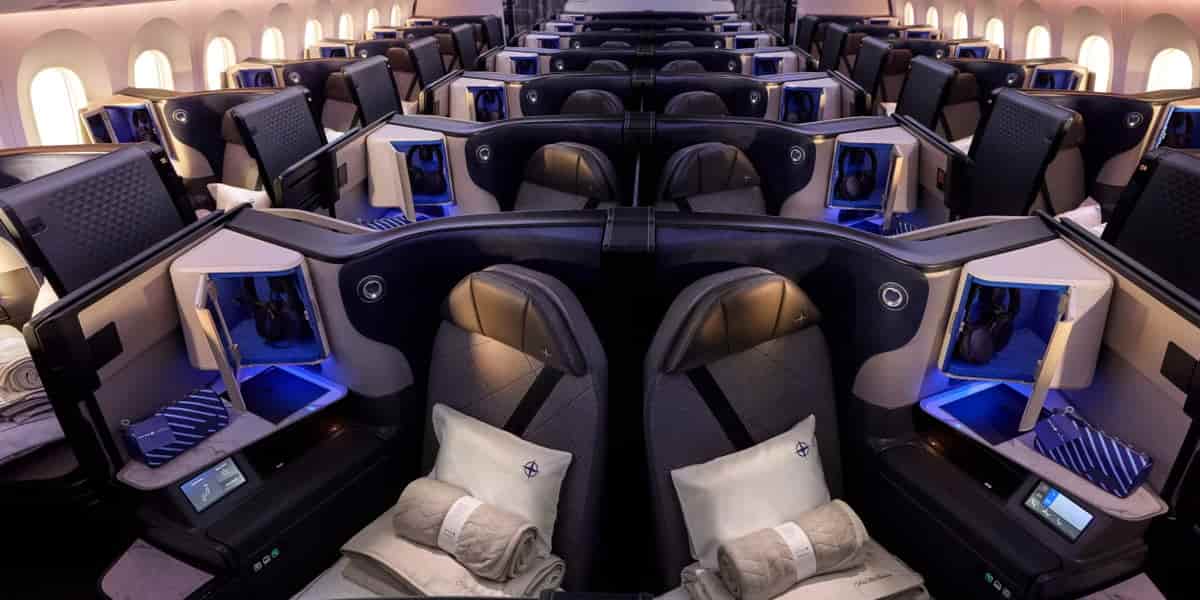
A surge in premium travel demand has prompted airlines to invest in increasingly sophisticated business-class cabins, but these advancements are creating significant logistical and regulatory challenges. The introduction of features like sliding doors, designed to enhance passenger privacy, is now causing substantial delays in aircraft certification and delivery.
Aviation regulators, including the Federal Aviation Administration (FAA) in the U.S. and the European Union Aviation Safety Agency (EASA), are scrutinizing these new seat designs to ensure they meet stringent safety standards, particularly concerning passenger evacuation procedures. This rigorous process has led to extended approval timelines, leaving newly manufactured aircraft grounded at factories and airlines unable to utilize their most profitable seating sections.
Several major carriers have been impacted. American Airlines experienced a seven-month delay before its A321XLR's sliding doors were certified, while United Airlines faced similar issues with its Boeing 787-9 Polaris suites. Air India has also had to keep its new 787 business-class doors locked open pending FAA approval. Lufthansa's advanced Allegris suites have also encountered certification problems, rendering some seats unusable even after partial approval.
In more extreme cases, KLM plans to fly its new Airbus A350 with all 34 business-class seats empty due to a "revised interpretation of regulatory requirements" by EASA, potentially forfeiting millions in revenue. This situation highlights the complexities arising from unique seat configurations and angles that necessitate additional safety testing.
Planemakers are also feeling the strain. Boeing has warned that seat certifications are affecting delivery schedules, with a number of 787 Dreamliners held up awaiting approval. Boeing's marketing director noted that airlines' desire for distinctive business-class products makes it difficult to reuse pre-certified catalog options. Airbus, while able to deliver aircraft without seats, prefers to find solutions to ensure seats are installed prior to handover.
The core issue revolves around ensuring that complex seat designs do not impede passenger egress during emergencies. As airlines continue to push the boundaries of cabin innovation, the certification process remains a critical bottleneck, impacting both airline operations and aircraft manufacturing timelines.