Key facts
- The XPRIZE Wildfire competition aimed to advance wildfire detection and suppression technologies.
- No team won the grand prize for space-based wildfire detection across Australia within 10 minutes.
- No team won the grand prize for autonomously detecting and suppressing a fire in Alaska within 10 minutes.
- Anduril Industries' system detected a fire and deployed drones within 10 minutes but could not fully extinguish it.
- SIRIUS Wildfire Alliance won $500,000 for a satellite-based wildfire detection and modeling system.
- Anduril Industries won $1 million for the fastest wildfire detection capability.
The $11 million XPRIZE Wildfire competition, which concluded recently, showcased advancements in wildfire detection technology but underscored the persistent challenges in rapid fire suppression. While several teams demonstrated impressive capabilities in spotting fires quickly, none managed to fully extinguish a blaze within the stringent 10-minute timeframe required by the competition.
The competition featured two main tracks: space-based wildfire detection and autonomous response. In the space-based track, teams were tasked with accurately detecting all fires across a large area of Australia within 10 minutes. Although no team secured the $3.5 million grand prize, the SIRIUS Wildfire Alliance from the UK received $500,000 for its system that uses optical and radar satellite data to identify and model wildfire spread. Team Snuffed from Arizona was awarded $250,000 for its transparent and user-friendly detection system, with MyRadar, DeepFire, and Germany's Mayday.AI receiving $100,000 each for special recognition.
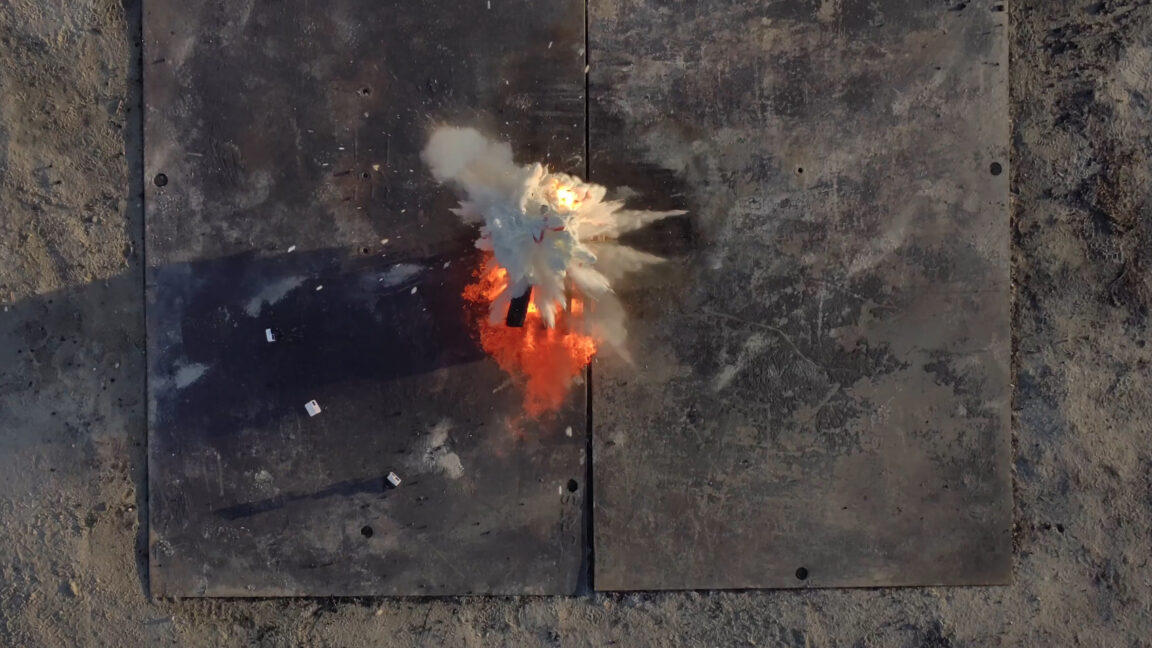
The autonomous response track challenged teams to detect and extinguish a high-risk fire in rural Alaska within 10 minutes, while ignoring decoys. Anduril Industries, a US company with defense contracts, secured the $1.2 million first prize for its system that uses thermal imaging sensors and AI-driven computer vision to detect ignitions, deploying a swarm of drones for surveillance and a Ghost-X drone to drop fire retardant balls. While Anduril's system successfully detected the fire and deployed suppression drones within the time limit, it could not fully extinguish the blaze, leaving the grand prize unclaimed. Anduril also won an additional $1 million for achieving the fastest detection capability.
Program director Andrea Santy noted that current typical wildfire detection relies on 911 calls, which average a 15-minute delay. The competition aimed to develop technologies that could provide earlier detection and safer, more effective tools for firefighters, ultimately reducing risks to personnel, communities, and ecosystems.