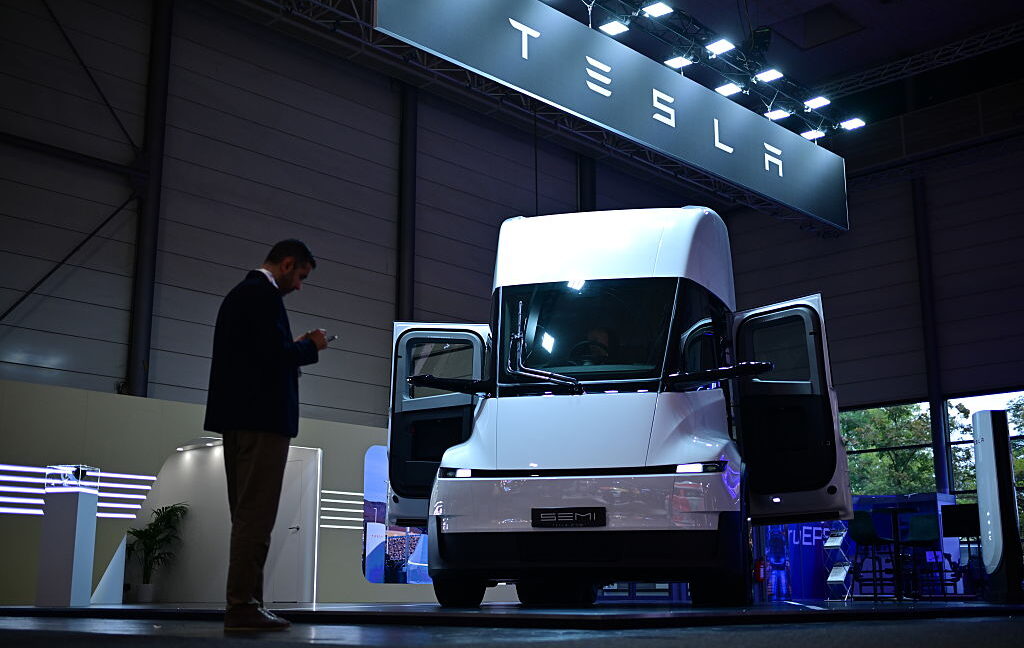
Key facts
- Tesla has officially launched high-volume production of its Semi electric truck.
- The long-range version of the Semi will travel an estimated 500 miles per charge.
- The standard version will get an estimated 325 miles per charge.
- Electric semis can cost two to three times more upfront than diesel counterparts.
- US diesel prices have hit record highs this month due to the Iran War.
- An alliance of shippers including Microsoft and PepsiCo placed a record order for 2,500 Tesla Semis.
- Tesla plans to open 30 specialized public chargers for the Semi by the end of the year.
Tesla has officially launched high-volume production of its long-awaited Semi electric truck, aiming to appeal to cost-conscious trucking fleet managers. The vehicle, first unveiled in 2017, is now entering production nearly a decade later.
Elon Musk, Tesla CEO, stated in a pre-taped video that the truck is designed to be "a driver’s truck" and "like a sports car in truck form." The long-range version is estimated to travel 500 miles on a single charge, while the standard version offers an estimated 325 miles, both competitive with or exceeding ranges advertised by other electric truck manufacturers.
Despite the launch, the Semi faces significant infrastructure challenges. Electric trucks, including the Semi, can have upfront costs two to three times higher than their diesel counterparts. Furthermore, a widespread network of specialized megawatt chargers is required to fill their large batteries in a timely manner. Tesla's website currently shows only two such public chargers operating in the Los Angeles area, though the company plans to open 30 by the end of the year, according to Dan Priestley, who leads the Semi program.
Adding to the hurdles, the Trump administration has previously cut federal support for electric vehicles and is working to lower fuel economy standards for truck engines, which could reduce the incentive for manufacturers to meet climate goals. Heavy trucks contribute significantly to US greenhouse gas emissions.
However, the current market conditions present an opportunity for electric vehicle makers. US diesel prices have reached record highs this month, exacerbated by disruptions to oil production and shipping in the Middle East due to the Iran War. Musk noted that the cost of electricity is substantially lower than diesel, making the Semi economically viable in "crazy times."
This week, a consortium of shippers, including Microsoft and PepsiCo, placed a record order for 2,500 Tesla Semis, set for delivery over the next 18 months. This order could nearly double the number of heavy-duty electric trucks on US roads. The group selected Tesla trucks based on price, performance, production capability, and service support, according to Meena Bibra, a spokesperson for the nonprofit Smart Freight Centre. The story originally appeared on wired.com.