Key facts
- Chinese President Xi Jinping visited Egypt, signing agreements on economic zones, AI, and renewable energy.
- Egypt reaffirmed its commitment to China's Belt and Road Initiative and the One China principle.
- Huawei's bid for AI chips for an Egyptian data center has created tension with the US.
- Xi Jinping called for a new Middle East security framework shaped by regional nations.
- Egypt aims to balance US security ties with Chinese technological and financial investments.
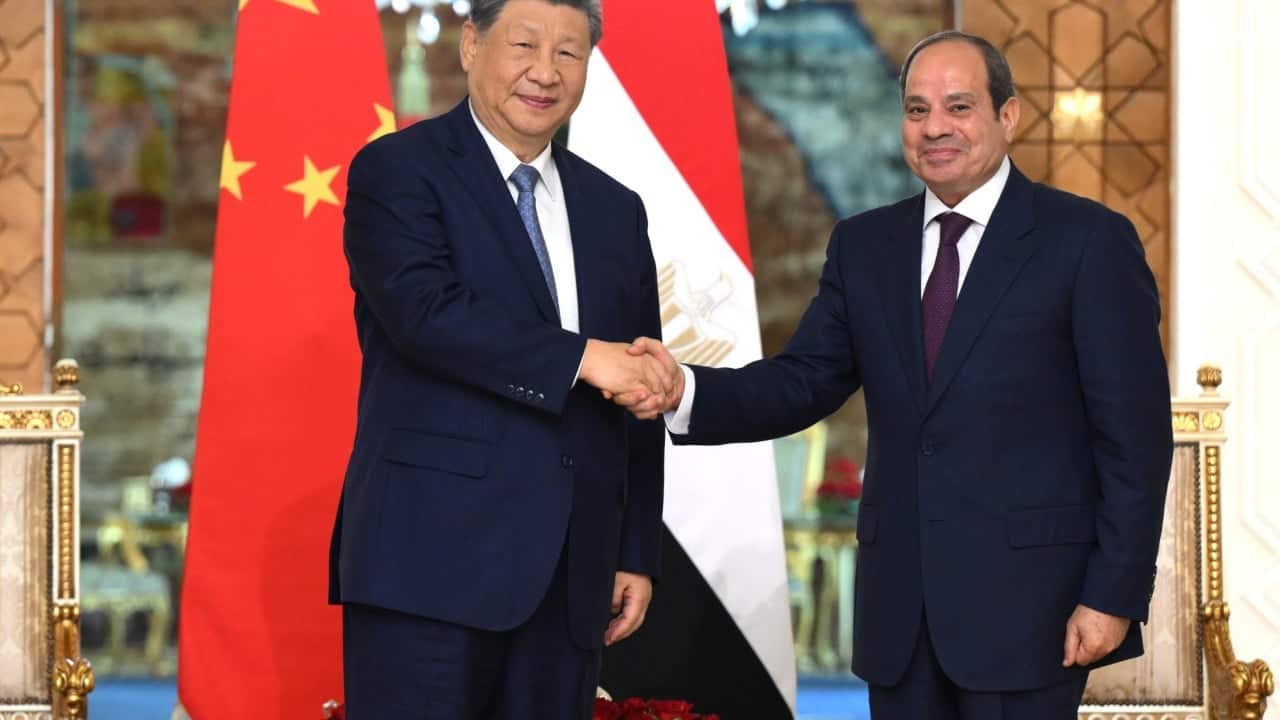
Chinese President Xi Jinping concluded a visit to Egypt, signing a series of agreements and a joint statement on bilateral ties. The visit, timed to the 70th anniversary of diplomatic relations, included joint military exercises and a bid by Chinese tech giant Huawei to supply AI computing chips for a data center. Central to the agreements was the announcement of a third phase of the Egyptian-Chinese Suez Canal Economic Zone (SCZone), expanding a project that already hosts numerous companies and significant investment. Beyond trade, cooperation was expanded on renewable energy, AI, and Egypt’s digital transformation, reaffirming alignment with China’s Belt and Road Initiative.
Experts suggest these economic zones facilitate exports and allow China to circumvent sanctions. The plans come at a critical time for Egypt, which has seen a sharp decline in Suez Canal toll revenue due to attacks in the Red Sea. The Saudi-backed Europe-Egypt-NEOM-GCC Corridor is mentioned as a regional blueprint to bypass the Strait of Hormuz.
In the joint statement, Egypt reaffirmed the One China principle and supported China's BRICS presidency, while China acknowledged the importance of the Nile River for Egypt amidst its dispute with Ethiopia. China's mediation role in the Nile water dispute and other Horn of Africa conflicts was also highlighted.
The Huawei bid for AI chips has tested Egypt's relationship with the US, which is reportedly seeking counteroffers from American companies. While the bid was unmentioned in official documents from the visit, experts note that financially stressed Egypt may find Chinese financing packages more accessible, especially given the high cost of US AI offerings.
Analysts suggest Cairo is emerging as a point of convergence between Beijing and Washington, balancing US military support with Chinese technology investments. Egypt has previously balanced its positions, with President Sisi visiting Beijing multiple times and China financing key infrastructure projects. The joint statement also called for reforms in international financial institutions to be fairer to developing countries.