Key facts
- Turkey would consider full membership in the Shanghai Cooperation Organisation (SCO).
- President Erdogan stated that SCO membership would not require Turkey to leave existing alliances with the West.
- Turkey currently holds 'dialogue partner' status within the SCO.
- Erdogan attended the SCO summit in Kyrgyzstan.
- The SCO is described as a political, economic, and security organization.
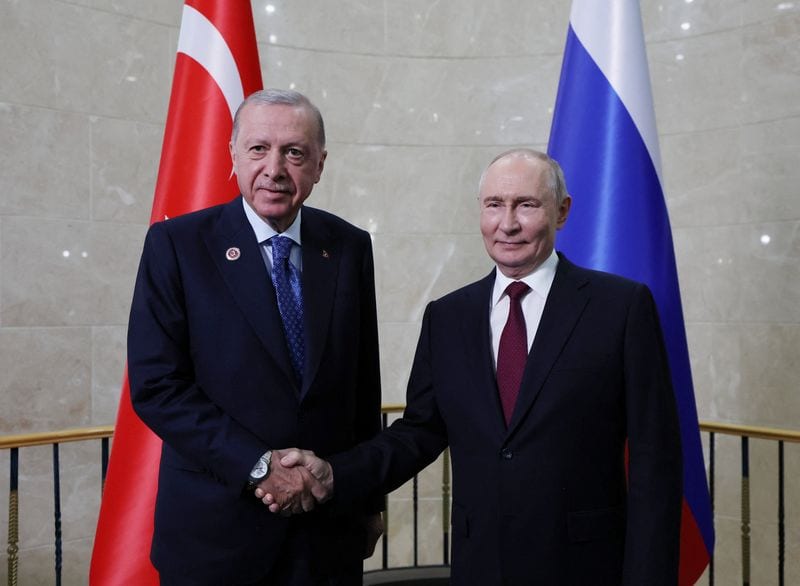
Turkish President Recep Tayyip Erdogan has indicated that Turkey, a member of NATO, would consider pursuing full membership in the Shanghai Cooperation Organisation (SCO), a bloc led by China and Russia. Erdogan stated that such a move would not necessitate Turkey's withdrawal from existing alliances or its ties with the West. He made these remarks following his attendance at an SCO summit in Kyrgyzstan, where Turkey currently holds 'dialogue partner' status.
Erdogan has previously expressed a desire for Turkey to become a permanent member of the SCO, viewing it as a potential multilateral alternative to the current Western-dominated international order. Turkey has been a dialogue partner of the SCO since 2012, being the only NATO member country to hold this status. The SCO's full members include China, Kazakhstan, Kyrgyzstan, Russia, Tajikistan, Pakistan, India, and Uzbekistan. Afghanistan, Belarus, Iran, and Mongolia are observer countries, while Armenia, Azerbaijan, Cambodia, Nepal, Sri Lanka, and Turkey are dialogue partners.
Analysts suggest that Erdogan's remarks stem from Turkey's often strained relations with Western powers, particularly the United States. Tensions have arisen from issues such as Turkey's purchase of Russian S-400 defense systems, which led to U.S. sanctions and Turkey's removal from the F-35 fighter jet program. Despite backing opposing sides in the Syrian war, Turkey and Russia have maintained close coordination. Turkey has also adopted a balanced approach to the Russia-Ukraine conflict, providing arms to Ukraine while refraining from imposing sanctions on Russia and criticizing Western policies towards Moscow. Ankara has also sought to mediate between Russia and Ukraine.
Mehmet Ozkan, Professor of International Relations, noted that Turkey does not perceive the SCO as being dominated by any single country, but rather as a rising multilateral alternative. He also highlighted a 'natural connection' between Turkey and the SCO, as three of its founding members—Kazakhstan, Kyrgyzstan, and Uzbekistan—are Turkic-speaking. The SCO, founded in 2001, focuses on regional security, economic cooperation, and counterterrorism.