Key facts
- Vance's post urged Republicans to focus on affordability, reevaluate foreign relations and overhaul the US relationship with Israel.
- Three people familiar with the White House and Vance's communications said the post was not a break with Trump.
- Those people said White House chief of staff Susie Wiles knew about Vance's post in advance.
- Trump has acknowledged the Iran war played a role in the rout through high gas prices but has defended it.
- Republicans lost in states where Vance campaigned, and some strategies he endorsed may have swung races away.
- Senator Ted Cruz said Republicans had not done enough on affordability; Governor Ron DeSantis blamed a focus on transgender issues.
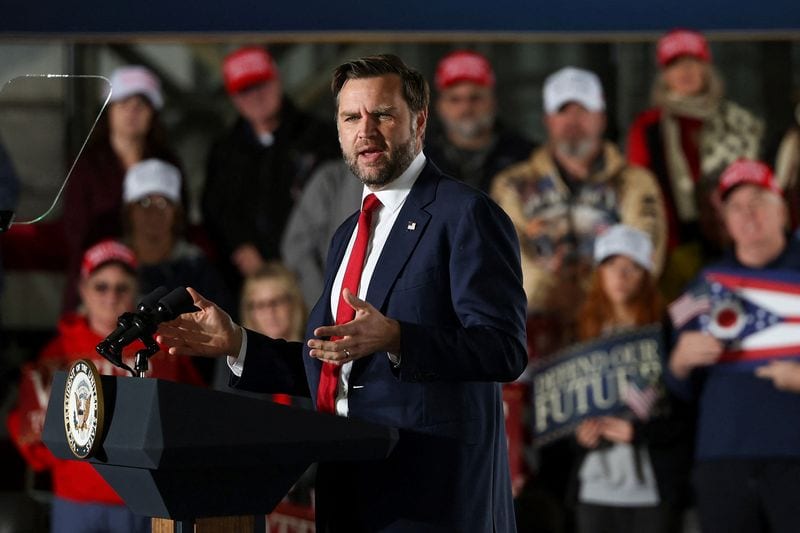
Vice President JD Vance said in a social media post on November 4, 2026, that the Iran war caused Republicans' midterm defeat, and he laid out a platform for a Republican rebound. Republicans lost control of Congress in the November 3 vote. Vance called for a swift end to the conflict and urged Republicans to focus on affordability, reevaluate foreign relations and overhaul the US relationship with Israel.
The post put Vance openly on the side of ending the war for the first time, Reuters reported. Three people familiar with the White House and Vance's communications told Reuters the vice president was not breaking with Trump and that White House chief of staff Susie Wiles knew in advance about the post. Reuters could not determine whether Trump was aware of it beforehand.
Trump has acknowledged the Iran war played a role in the Republican rout because of high gas prices but has continued to defend it. "I would have done nothing different," he told reporters on November 4, 2026. Trump has called Americans' affordability concerns a Democratic "hoax." He launched the war against Iran following lobbying from Israeli Prime Minister Benjamin Netanyahu and later endorsed Netanyahu in the Israeli election.
On November 6, 2026, Trump reshuffled senior White House leadership, replacing Wiles with Stephen Miller, a move the report says suggests the White House plans to double down on some of Trump's more hardline policies. Donald Trump Jr. endorsed Vance's remarks on social media, along with some conservative allies.
According to a Reuters review of half a dozen speeches since the Republican convention in September, Vance argued the case for Republicans almost exclusively through his own policy portfolio, bypassing Trump's signature policies including the Iran war and deportations as polls showed the president's popularity dragging down Republican candidates. Two people familiar with the strategy said the change was deliberate and that Vance and his advisers saw economic nationalism, foreign policy restraint and public safety as subjects he could address with authority.
Vance has not said whether he will run for president in 2028, and Trump has not endorsed him or anyone else. Michael Ricci, a Republican strategist and former adviser to House Speakers John Boehner and Paul Ryan, said Vance's message forced conservatives to debate the merits of the war and what core tenets Republican presidential candidates should embrace in 2028. "It's simplistic to say this about him looking for ways to differentiate himself from Trump," Ricci said. "This is about him using his megaphone of the vice presidency to set the terms of debate."
Vance's brand did not emerge from the midterms unscathed. Republicans lost in states where he campaigned, and some strategies he endorsed, including an ad by Ohio gubernatorial candidate Vivek Ramaswamy that cast doubt on sexual abuse suffered by the victorious Democratic candidate, Amy Acton, may have swung races away from Republicans. Senator Ted Cruz of Texas said Republicans had not done enough on affordability, Florida Governor Ron DeSantis said losing candidates had focused too heavily on transgender issues and neglected voter concerns about data centers and artificial intelligence, and Secretary of State Marco Rubio has stayed silent. Representatives for Vance declined to comment, and White House representatives referred Reuters to Trump's comments on November 4, 2026.