Key facts
- Democrats are poised to capture 10 of North Carolina's 14 House seats, per three Democratic strategists and campaign officials.
- Democrats had not contacted several House candidates before their wins because the races were seen as long shots, the strategists said.
- Adam Hamilton entered the Kansas Senate race only in April 2026, campaign adviser Guy Cecil told Reuters.
- Scott Colom would become Mississippi's first Black senator since Reconstruction if his 2,000-vote lead holds.
- Democratic National Committee vice chair Jane Kleeb said chair Ken Martin faced calls for his removal over the everywhere strategy.
Democrats seized control of both houses of Congress from Republicans in the November 3, 2026, midterm elections, Reuters reported, after a string of victories in Republican strongholds including Kansas and Texas. The party had bet that rising costs, voter unease with President Donald Trump and strong local candidates could put Republican territory in play.
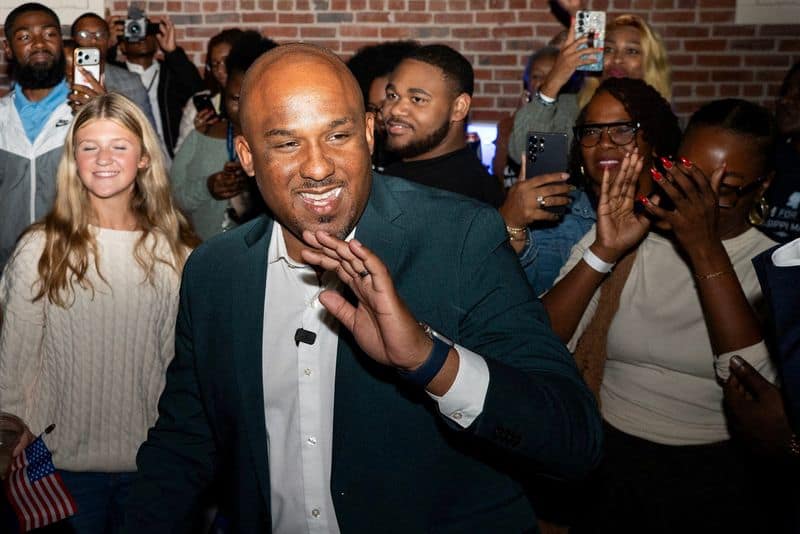
Senate Minority Leader Chuck Schumer's recruitment of public prosecutor Scott Colom in Mississippi exemplified the approach. Schumer invited Colom and his father to brunch in November 2024 and told him to run, he told the news channel MS Now. Colom held a 2,000-vote lead as election officials counted provisional ballots, and would become Mississippi's first Black senator since post-Civil War Reconstruction if the lead holds. "Mississippi has always been overlooked or at the bottom of things nationally," Colom told reporters on Friday. "But I think that this race is going to make a difference in our nation."
Democrats invested in party organizations across the country rather than concentrating resources in a handful of traditional battlegrounds. Jane Kleeb, vice chair of the Democratic National Committee, said chair Ken Martin chose to compete everywhere and faced calls for his removal over it. Some races were considered such long shots that national party leaders had no contact with the candidates until they won.
By early 2026, Democratic polling showed voters shifting toward the party on the economy, traditionally a Republican strength. Strategists said Trump's tariffs on foreign goods and the rise in fuel prices after he launched the war against Iran in February accelerated those trends.
In North Carolina, where Republicans redrew the map to try to control 11 of 14 House seats, Democrats were positioned to take 10, according to three Democratic strategists and campaign officials. Those strategists said the party had not been in touch with several of its own candidates because Republicans had far more cash.
In Kansas, Adam Hamilton entered the Senate race only in April and the national party did not focus on his campaign until the closing weeks, campaign adviser Guy Cecil told Reuters. "We need to expand our idea of what's possible," Cecil said. Anderson Clayton, chair of the North Carolina Democratic Party, said the party should not cede ground to Republicans.