Key facts
- The U.S. Treasury's semi-annual currency report found no major trading partner manipulated its currency in 2025.
- Ten economies, including China, Japan, and Taiwan, are on the Treasury's monitoring list.
- The Treasury warned that excessive yen volatility is undesirable.
- The U.S. Treasury called for the Bank of Japan to hike interest rates.
- Taiwan's central bank highlighted its strong communication channels with the U.S. Treasury.
- Taiwan's trade surplus with the U.S. has increased due to demand for technology products.
The U.S. Treasury Department's latest semi-annual currency report found no major trading partner manipulated its currency for unfair trade advantage in 2025. However, the department issued a warning regarding the yen's persistent weakness and excessive volatility, urging the Bank of Japan to continue raising interest rates. The Treasury noted that while nominal wages have risen, inflation has strained household purchasing power, and monetary policy normalization would help anchor inflation expectations and reduce exchange rate volatility.
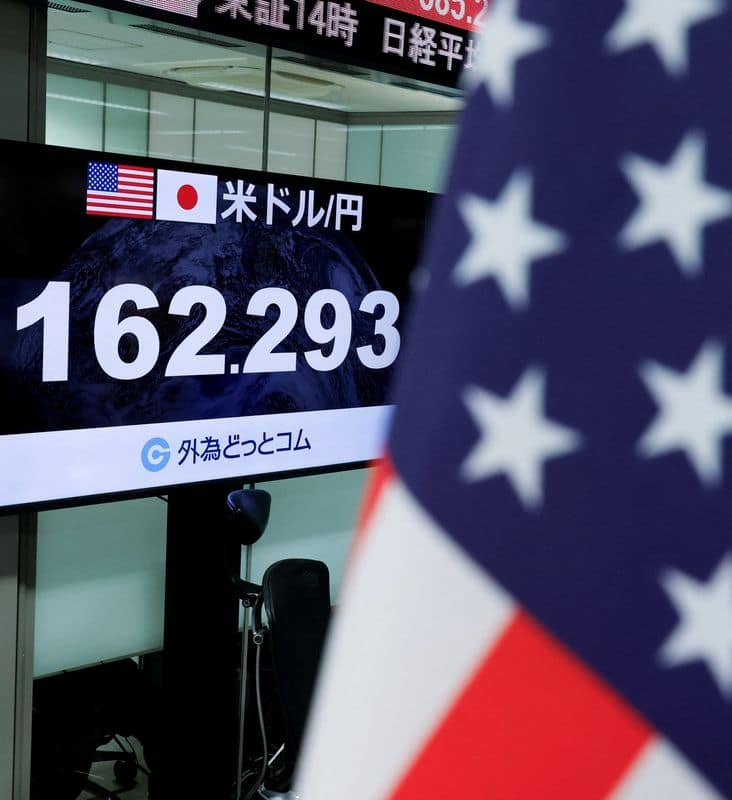
The report comes as the yen hit a 40-year low against the dollar, prompting concerns about potential intervention by Japanese authorities. The Treasury highlighted that the yen has fallen significantly, indicating substantial undervaluation despite a narrowing of U.S.-Japan interest rate differentials.
Ten economies, including China, Japan, Korea, Taiwan, Thailand, Singapore, Vietnam, Germany, Ireland, and Switzerland, remain on the Treasury's monitoring list. These countries are placed on the list if they meet two of three criteria: a significant bilateral trade surplus with the U.S., a material current account surplus, or persistent, one-sided intervention in the foreign exchange market. Taiwan's central bank emphasized its good relations with the U.S. Treasury and noted that its trade surplus with the U.S. has grown significantly, driven by strong demand for semiconductors. Taiwan's net Foreign Direct Investment outflow expanded, reflecting global supply chain restructuring.