Key facts
- Japan and South Korea intervened in currency markets to support their respective currencies.
- The United States reportedly conducted rate checks as part of the coordinated action.
- The intervention aimed to curb the significant weakness of the Japanese yen and South Korean won.
- The yen saw a significant strengthening against the dollar following the intervention.
- The Bank of Japan maintained its benchmark interest rate at 1%.
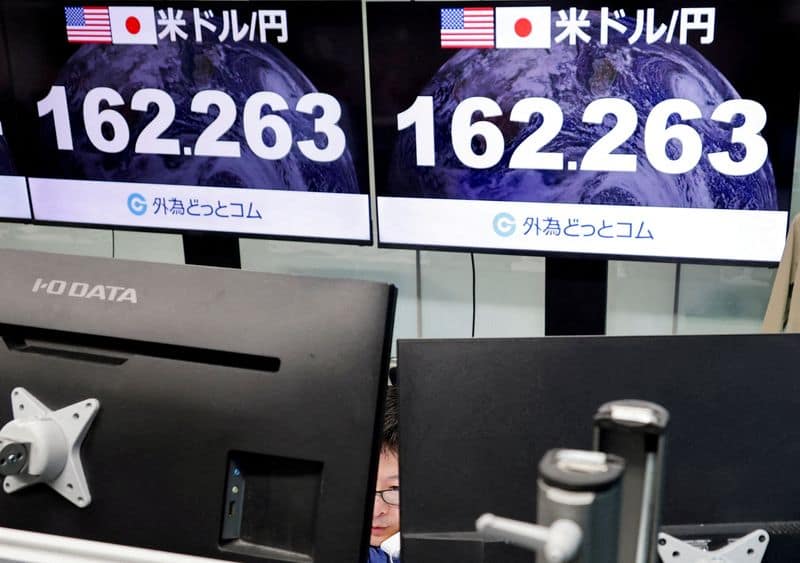
Japanese and South Korean authorities stepped into the open market to buy their currencies in a rare, coordinated intervention, with the United States also reportedly involved in rate checks. The move late Thursday aimed to curb the significant weakness in both the yen and the won.
The intervention saw the yen strengthen away from 40-year lows against the dollar, though traders began testing Tokyo's resolve on Friday. The Bank of Japan held its benchmark interest rate steady at 1% as expected, with market participants focusing on the central bank's commentary for signals on future rate hikes.
Simultaneously, the Korean won firmed by 2% to its highest level in nine months, following reports of South Korea's foreign exchange authorities conducting a dollar-selling intervention. Analysts noted that the aligned interests of the countries and the tight coupling of the won and yen made a joint intervention potentially more impactful.
Japan has intervened in currency markets in coordination with the U.S. or other G7 partners five times since 1985, and eight times on its own, according to analysis by Brent Donnelly at Spectra Markets. Most joint interventions coincided with a turn in the dollar/yen pair's direction.
The won had previously hit a 17-year low of 1,561.50 last month and was last trading weaker at 1,437.62 per U.S. dollar on Friday. The currency has gained nearly 8% this month, partly due to firms repatriating dollars from U.S. offerings, such as SK Hynix's $26.5 billion offering.