Key facts
- The US and Japan have jointly intervened to support the yen, the first coordinated action in 15 years.
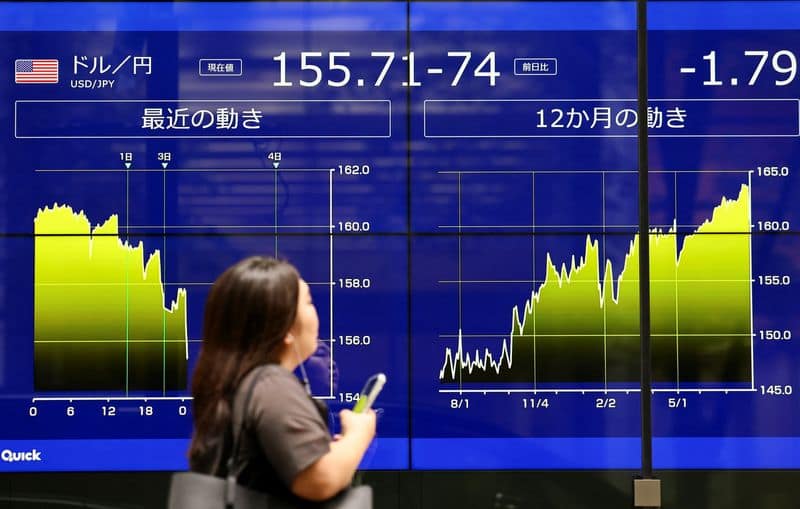
- The yen recently fell to a 40-year low against the dollar, reaching 163 yen per dollar.
- Japan sold US Treasurys, and the US Treasury sold euros to fund yen purchases.
- Analysts believe the intervention signals US concern over rising Treasury yields.
- The yen carry trade is seen as having broken down, potentially impacting US tech stocks.
The U.S. Treasury has joined Japan in intervening to support the yen, marking the first coordinated action between the two nations in 15 years. The move comes as the yen recently slumped to a 40-year low against the dollar, reaching 163 yen per dollar last Thursday, its lowest point since 1986. The intervention saw Japan sell U.S. Treasurys, while the U.S. Treasury sold euros to fund its yen purchases.
Analysts suggest the intervention may signal U.S. concern over rising Treasury yields. Goldman Sachs analysts noted that the U.S. likely does not want to sell dollars to weaken the greenback, indicating that further yen weakness or solo U.S. dollar-selling interventions by Japan are not welcomed. Robin Brooks, an economist at The Brookings Institution, interpreted the U.S. move as a potential concern about rising yields, noting that Japan's intervention by selling Treasurys could push yields higher.
Concerns are also mounting regarding the impact on the yen carry trade, a strategy where investors borrow yen at low interest rates and swap it into higher-yielding assets like U.S. stocks and bonds. Torsten Sløk, chief economist at Apollo, stated that the yen carry trade has likely broken down and is now trading on Japan's fiscal outlook rather than interest rate differentials. Gus Garrow, a senior manager at StoneX, warned that an unwinding of the yen carry trade could pose a significant risk to U.S. tech stocks, citing a past sell-off in the Nasdaq 100 when the trade began to unwind.