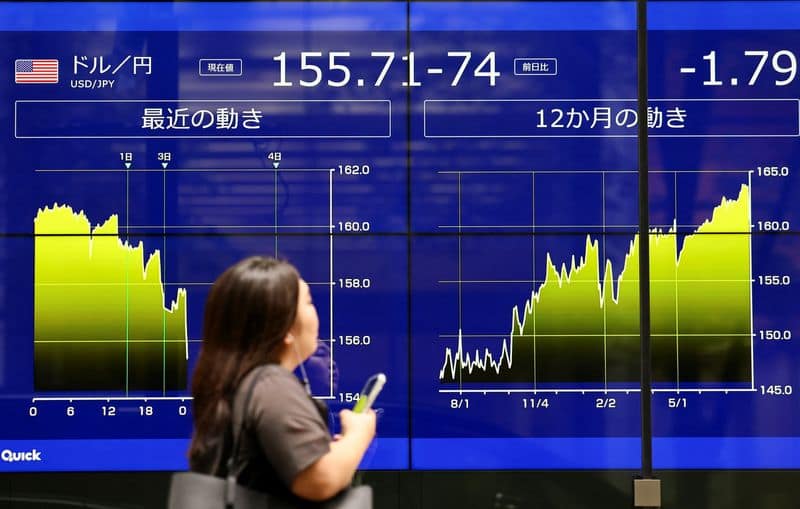
The United States and Japan have collaborated in a rare currency market intervention aimed at bolstering the Japanese yen. This joint action, the first since 1998, sought to counter the yen's significant decline against the dollar, which had reached multi-decade lows.
The yen's weakness was primarily attributed to the widening interest rate differential between the US and Japan. Higher interest rates in the US made dollar-denominated assets more attractive, fueling carry trades where investors borrow cheap yen to invest elsewhere. This dynamic put sustained downward pressure on the Japanese currency.
Renewed tensions in the Middle East also contributed to the yen's slide by increasing demand for the US dollar as a safe-haven asset. The US government viewed the situation as potentially destabilizing, as a sudden unwinding of carry trades could spill over into global markets. Additionally, a weaker yen makes Japanese exports cheaper, potentially exacerbating trade imbalances with the US.
For Japan, a weak yen directly impacts the cost of essential imports like energy and food, straining businesses and households. The intervention also served as a crucial message of credibility, signaling Japan's willingness to defend its currency with strong international backing.
Historically, joint interventions have demonstrated greater effectiveness and longevity. A previous US-Japan collaboration in 1998 helped stabilize the yen, and the 1985 Plaza Accord saw major economies coordinate to weaken the dollar. However, the article notes that fundamental factors, such as the persistent interest rate gap, will continue to influence the yen's trajectory.