Key facts
- The U.S. refused Saudi Arabia's request for direct air strikes against Houthi threats on September 10.
- Direct U.S.-Houthi negotiations took place at the U.S. Embassy in Muscat, Oman, on September 13.
- The Bab el-Mandeb Strait handles up to 2.6 million barrels per day of refined products.
- The Strait of Hormuz accounts for up to 5.5 million barrels per day of refined products.
- China has a significant economic and military presence in Djibouti, a member of Saudi Arabia's proposed MMDC.
- Chinese vessels have remained unaffected by Houthi blockades on key shipping routes.
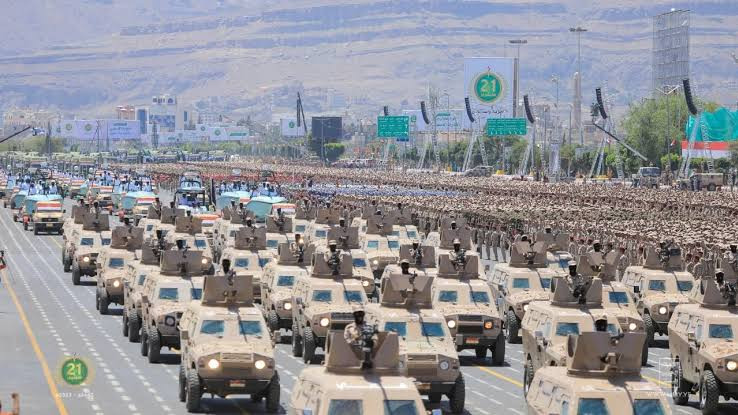
Iran's Houthi allies are poised to officially close the Bab el-Mandeb Strait to all 'enemy' shipping, a move that would give Tehran significant leverage over global energy flows. This development comes as the U.S. has reportedly refused direct military assistance to Saudi Arabia against Houthi threats, while simultaneously engaging in direct negotiations with Houthi leaders.
According to an energy source close to Iran's Petroleum Ministry, the Houthis are expected to formally close the Bab el-Mandeb Strait within days. This would mean Iran effectively controls up to 42% of historical crude oil flows and 30% of LNG flows that pass through the Strait of Hormuz (roughly 30% of oil and 20% of LNG) and the Bab el-Mandeb Strait (about 12% of oil and 10% of LNG). Before current blockades, the Strait of Hormuz handled up to 5.5 million barrels per day of refined products, while the Bab el-Mandeb Strait managed up to 2.6 million bpd.
The Houthis' recent seizure of key Red Sea islands, including Perim Island at the mouth of the strait, has amplified their leverage. IMF PortWatch data indicates that shipping through the Bab el-Mandeb has dropped nearly 90% below normal averages, even without a declared general blockade.
Adding to the geopolitical complexity, U.S. President Donald Trump reportedly refused Saudi Crown Prince Mohammed bin Salman's requests for direct air strikes on September 10. Instead, CENTCOM Commander Admiral Brad Cooper was sent to Riyadh for intelligence coordination. This refusal may stem from past Saudi reluctance to engage with the Biden administration or from assurances from the Houthis regarding U.S. vessels. Direct U.S.-Houthi negotiations, mediated by Oman, occurred on September 13.
Saudi Arabia is attempting to counter these threats by forming a 14-country Multinational Maritime Defense Coalition (MMDC), which includes elements of the Mecca Joint Defence Agreement (MJDA). However, China's substantial economic and military influence in Djibouti, a member of the MMDC, could complicate Saudi efforts. China's existing military base in Djibouti and its extensive Belt and Road Initiative corridor suggest that Djibouti's participation in the MMDC may be a balancing act to protect Chinese interests rather than a genuine alignment against Iran.