Key facts
- Houthis launched ballistic missiles at Saudi Arabia, striking a fuel depot near Riyadh's airport.
- Saudi Crown Prince Mohammed bin Salman requested US military support, which President Trump denied.
- Trump brokered a deal with Houthis for a 2025 ceasefire with the US, ensuring Red Sea shipping.
- A secret meeting of US, Arab, and Israeli military officials was held in Germany to discuss Iran.
- Houthi forces captured the Bab al-Mandeb Strait, a strategic waterway.
- The US approved significant bomb shipments to both Saudi Arabia and Israel.
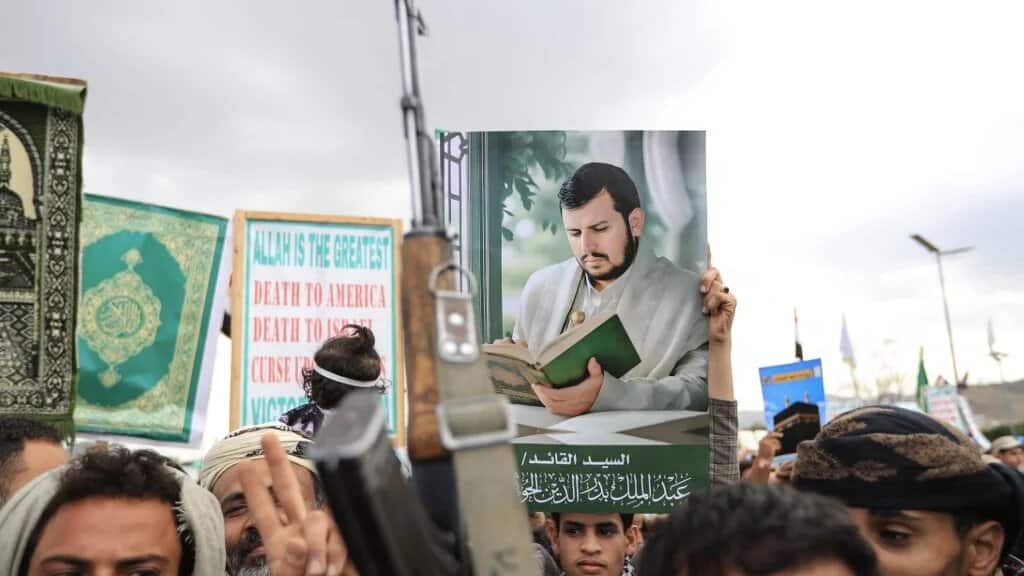
Yemen's Houthi rebels have escalated attacks on Saudi Arabia, including a ballistic missile strike on a fuel depot near Riyadh's international airport on Saturday. The strikes highlight the vulnerability of the Saudi kingdom to the Yemeni group's actions, which the Houthis claim are retaliation for Saudi strikes in Yemen.
Crown Prince Mohammed bin Salman sought US support from President Donald Trump, but Trump declined to offer direct military assistance, citing overstretched US forces and a desire to avoid new conflicts. Instead, Trump reportedly brokered a deal with Houthi leaders for a 2025 ceasefire with the US, aimed at keeping the Red Sea open to global shipping, excluding Saudi oil. This arrangement effectively means the US will not intervene in the ongoing conflict between the Houthis and Saudi Arabia.
Meanwhile, military commanders from the US and allied Arab nations, including Saudi Arabia, the UAE, Bahrain, Kuwait, Qatar, Jordan, and Egypt, reportedly met secretly with their Israeli counterparts in Germany. The meeting, organized by Centcom commander Admiral Brad Cooper, was to discuss the Iran war, though Israel subsequently leaked details of the gathering.
Earlier this month, Houthi fighters advanced rapidly, capturing the Red Sea port of Mocha and the strategic Bab al-Mandeb Strait. The fighting has resulted in significant casualties, with the Anti-Houthi National Resistance Forces reporting over 500 fighters killed and 1,500 injured.
Saudi Arabia's allies, including Turkey and Pakistan, have not provided aid. Israeli Prime Minister Benjamin Netanyahu has offered military and intelligence assistance, and Saudi Arabia is reportedly receiving intelligence from Israel via the US. However, Gulf analyst Andreas Krieg noted that Riyadh is hesitant to shift its dependence from Washington to an Israeli security framework.
Concerns that Iran-aligned Houthis could disrupt Red Sea shipping, in addition to existing pressures on the Strait of Hormuz, have led to increased oil and diesel prices. A senior Israeli intelligence source described the Houthis as an unexpected 'dark horse' over whom no one currently has deterrence.
Britain's new prime minister, Andy Burnham, has agreed to send military advisers to Saudi Arabia. The US has also approved substantial bomb shipments to both Saudi Arabia and Israel, totaling billions of dollars.
Houthi spokesperson Mohammed al-Bukhaiti stated that the war could end if the Saudi blockade on Yemen is lifted. He described the Houthi attacks as a response to the blockade, which has caused severe suffering and deaths in Yemen. US journalist Ryan Grim suggested that ending the wars and treating Yemen and Iran as sovereign nations would resolve the conflict.