Key facts
- The US military has confirmed the deployment of "space control weapons" in orbit.
The US military has confirmed the deployment of "space control weapons" in orbit, according to Air Force Secretary Troy Meink. The announcement, made at an industry conference, signals a significant shift in the Pentagon's approach to space warfare and is seen as a response to evolving threats from adversaries like China and Russia.
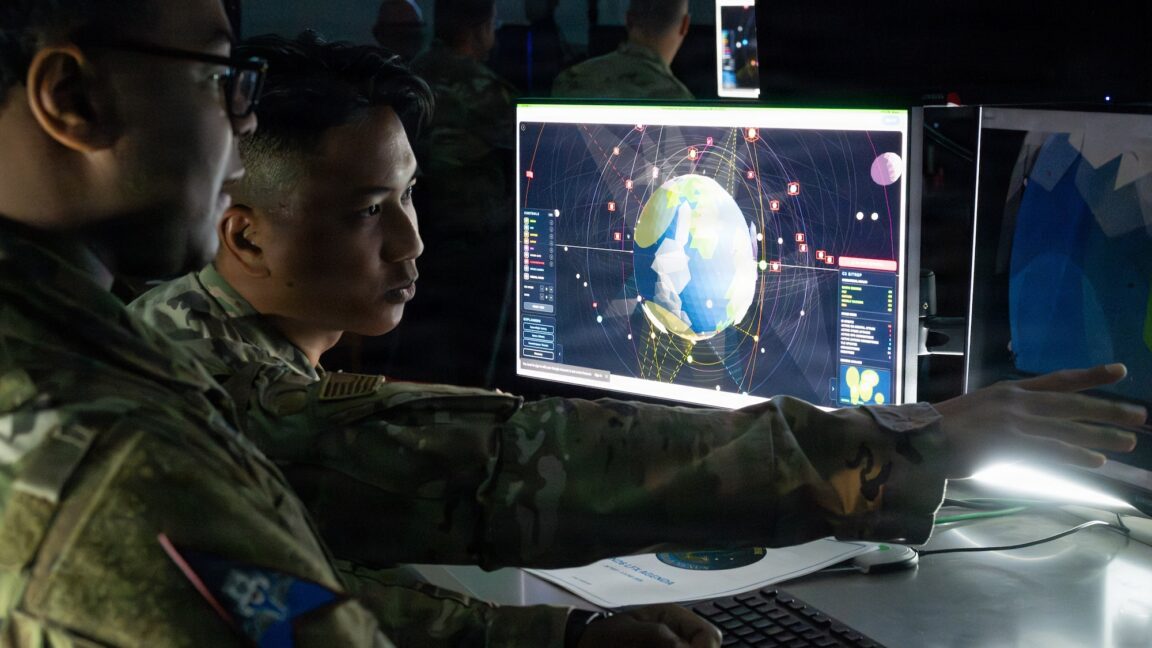
The confirmation of US space weapons deployment escalates geopolitical tensions and raises concerns about an arms race in orbit, potentially impacting global security and the commercial space industry.
Air Force Secretary Troy Meink announced Monday that the United States has deployed "space control weapons" in orbit, marking the first public confirmation of such capabilities. The disclosure, made at the Air and Space Forces Association’s annual Air, Space & Cyber Conference, signals a significant shift in the Pentagon's stance on space warfare and is intended to deter potential adversaries.
Meink stated that these weapons are "capable of defending the joint force against hostile adversary action" and are a response to "evolving threats." While he did not provide specific details about the weapons or their deployment timeline, he emphasized the critical importance of maintaining US freedom of operation in space for both military and economic security. The announcement comes amid heightened concerns over advancements in space weaponry by China and Russia, with US officials having previously highlighted Russian anti-satellite weapon tests and expressed suspicion regarding Chinese satellite maneuvers near US military assets.
Analysts at the Center for Strategic and International Studies noted China's deployment of highly maneuverable satellites, which could enable a formidable counterspace arsenal. Meink defended the US deployment by pointing to the perceived development of similar weapons by China and Russia over the past decade. The US military has increasingly relied on satellites for communications, navigation, and missile warning, with expanding applications including space-based sensing, targeting, and potentially missile defense interceptors.