Key facts
- Air quality in Singapore reached unhealthy levels on Tuesday.
- The haze is caused by wildfires in Indonesia.
- More than 12.5 million people have been exposed to haze across seven Indonesian provinces.
- The number of wildfire-related respiratory illnesses in those provinces more than doubled to 113,336 by September 9.
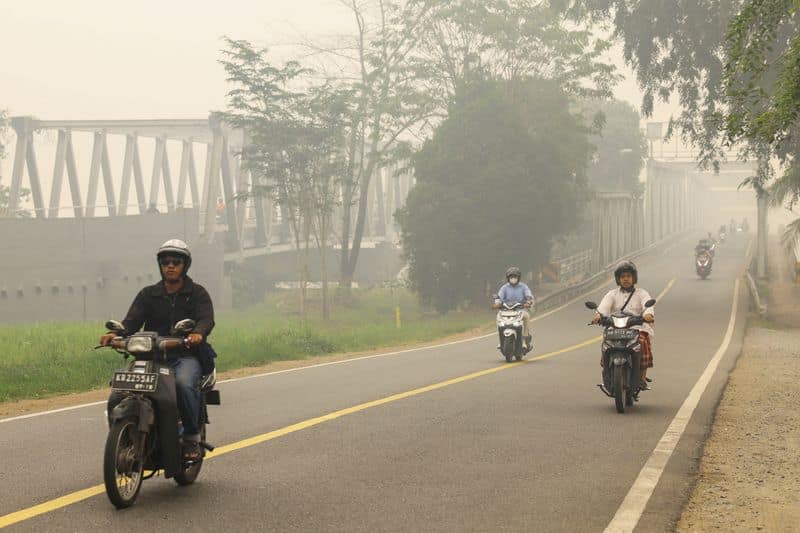
Air quality in Singapore reached unhealthy levels on Tuesday due to smoke from Indonesian wildfires, with the Pollutant Standards Index (PSI) registering 101. The haze, a mix of smoke from land clearing for farming and soot, is exacerbated by a severe "super-El Niño" weather pattern causing punishing droughts and high temperatures across Indonesia's West Kalimantan province on Borneo. This has led to the nation's most intense wildfires in 11 years.
Residents in Pontianak, Borneo, are experiencing respiratory problems, with volunteers distributing oxygen cylinders to those struggling to breathe. Visits for respiratory illness cases have risen, with one clinic treating 187 cases of breathing difficulties in the first 11 days of September, compared to 422 for all of August. More than 12.5 million people have been exposed to haze across seven provinces on Borneo and Sumatra, and the number of wildfire-related respiratory illnesses has more than doubled to 113,336 by September 9, from 50,891 on September 1.
Indonesia's emissions during the week to September 7 made up more than a third of the global total, according to the European Union's Copernicus climate monitoring service. From January to July, fires raged across 200,000 hectares, with an additional 600,000 hectares damaged in August. Indonesia has deployed over 50 aircraft for water drops and cloud seeding, and Japan has sent 180 crew and three aircraft to assist firefighting efforts.