Key facts
- Rocket Lab is protesting NASA's $700 million award of a Mars Telecommunications Network spacecraft contract to Blue Origin.
- Rocket Lab claims NASA's decision was inconsistent with congressional eligibility criteria.
- Rocket Lab alleges NASA's review of its technical proposal was punitive and inconsistent.
- The Mars orbiter contract was part of supplemental funding from the 'One Big Beautiful Bill' passed by Congress in 2025.
- The legislation specified that the Mars orbiter must be selected from US companies that received funding for Mars Sample Return design studies and proposed a separate, independently launched Mars telecommunication orbiter.
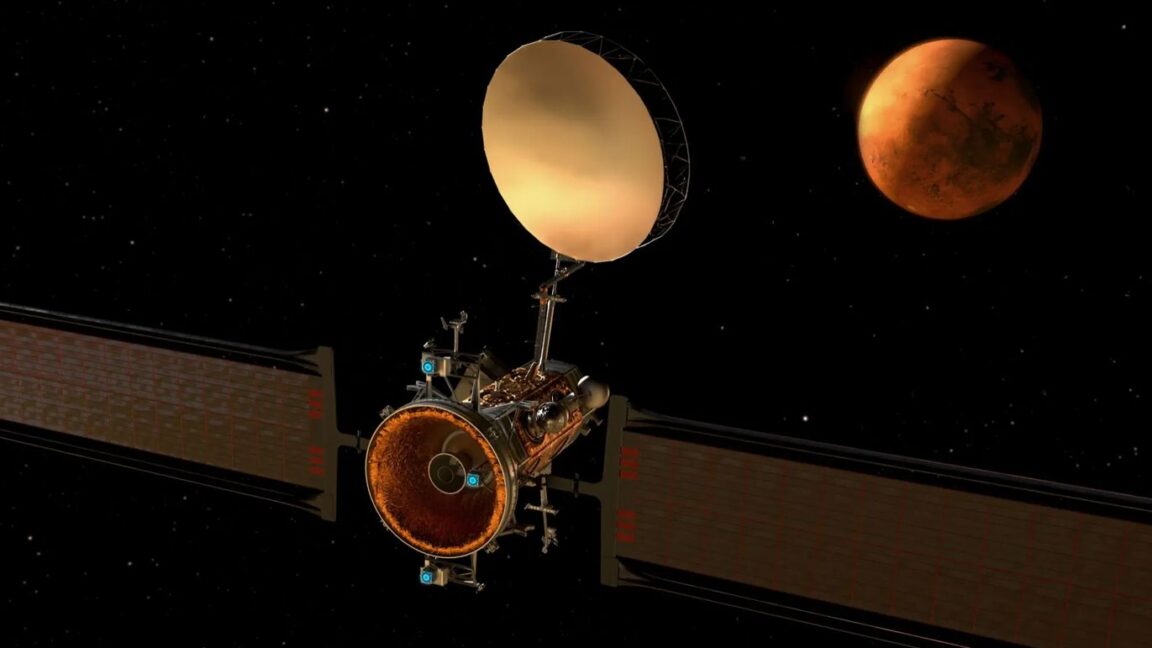
Rocket Lab is challenging NASA's recent decision to award a $700 million contract for a Mars Telecommunications Network spacecraft to Blue Origin. The aerospace company filed a protest with the US Government Accountability Office, asserting that NASA's selection appears to contradict eligibility requirements set by Congress and that its own technical proposal was unfairly evaluated.
The contract, part of supplemental funding from the 'One Big Beautiful Bill' passed in 2025, stipulated that bidders must have received funding for commercial design studies for Mars Sample Return in fiscal years 2024 or 2025 and proposed a separate, independently launched Mars telecommunication orbiter supporting an end-to-end Mars sample return mission. Rocket Lab believed this language favored its proposal.
While Blue Origin was ultimately selected, Rocket Lab contends that the agency's review of its technology was "punitive" and "inconsistent." The exact rationale behind NASA's decision, particularly why Blue Origin's Blue Ring technology was chosen over Rocket Lab's proposal, remains unclear as the agency has not yet released its source selection statement. This procurement marks NASA's first use of a fixed-price contract for building, launching, and operating a planetary network, giving Blue Origin a potential first-mover advantage.