All NewsEducationTV
Equities & FundsCrypto & Digital AssetsAI & TechnologyBusiness & CorporateUS Politics & PolicyGeopolitics & Global RiskMacro, Rates & FXCommodities & EnergyEuropean Politics & MarketsAsia-PacificReal Estate & Property
All NewsHome
← Back to US Politics & Policy

US-Canada Trade Talks Collapse, Sparking Retaliation

Created at 22 Aug · 5:41 PM1 source↑ Market-relevant
IN SHORT

Trade negotiations between Canada and the United States failed, leading to the collapse of a potential deal and reigniting a trade war. Canada vowed to match U.S. tariffs with its own measures, citing unfair and uneconomic terms from Washington.

Key Numbers

50%U.S. tariffs on Canadian goods
$20 billionvalue of Canadian goods targeted by U.S. tariffs
September 8effective date for Canadian retaliatory tariffs
July 2024month Canadian-resident return trips to the U.S. were down
29%decrease in Canadian-resident car travel to the U.S. in July
27%decrease in Canadian-resident air travel to the U.S. in July

Who's Involved

Mark Carney
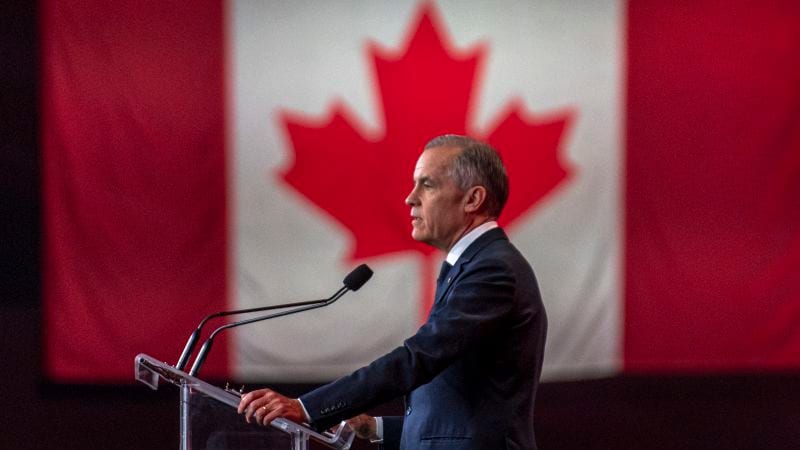
Canadian Prime Minister who suspended trade negotiations
Jamieson Greer
U.S. Trade Representative who stated no new talks are planned
Donald Trump
U.S. President involved in trade discussions
Daniel Béland
Political science professor at McGill University
US-Canada Trade Talks Collapse, Sparking Retaliation

↳ Why This Matters

The collapse of U.S.-Canada trade talks and the subsequent imposition of tariffs threaten to disrupt supply chains, increase costs for consumers and businesses, and fundamentally alter a long-standing economic and political alliance.

Key facts

  • Trade talks between Canada and the United States failed, reigniting a trade war.
  • The U.S. imposed 50% tariffs on approximately $20 billion of Canadian goods.
  • Canada promised to retaliate with matching import taxes.
  • Canadian Prime Minister Mark Carney cited unfair and uneconomic last-minute changes by the U.S.
  • Carney suspended negotiations and recalled Canada's trade team.
  • The collapse of talks signals a fundamental shift in the long-standing U.S.-Canada alliance.

Trade negotiations between Canada and the United States have collapsed, leading to the reignition of a trade war and fundamentally altering the relationship between the two allies. Despite earlier hopes for a deal, last-minute changes by the U.S. caused talks to falter, prompting Canada to suspend negotiations and vow dollar-for-dollar retaliation.

Canadian Prime Minister Mark Carney stated that the U.S. demands were "unfair, uneconomic, and undermined the net benefits for Canada," questioning the reliability of any agreement. He announced that Canada would impose tariffs on steel, dairy, appliances, agricultural equipment, pulp, paper, and electronics, effective September 8. The U.S. had previously imposed 50% tariffs on approximately $20 billion of Canadian goods.

U.S. Trade Representative Jamieson Greer indicated that the U.S. would proceed with its own countermeasures in response to Canadian retaliation, stating that no new talks were planned. The breakdown of negotiations signifies a significant shift from decades of integrated trade policy between the two nations, with implications for consumers and businesses already facing high prices.

Experts suggest this collapse confirms a perception among many Canadians that the Trump administration cannot be trusted, deepening a sense of betrayal. The dispute has extended beyond tariffs, with President Trump having previously questioned Canada's economic viability and used trade measures to push for increased production within the United States. Travel between the two countries has also seen a notable decrease.

Frequently asked questions

Canadian Prime Minister Mark Carney stated that last-minute changes in the United States' terms were "unfair, uneconomic, and undermined the net benefits for Canada."

The U.S. imposed 50% tariffs on about $20 billion of Canadian goods, and Canada has vowed to match these import taxes dollar for dollar, with retaliatory measures set to take effect September 8.

Measures will include tariffs on steel, dairy, appliances, agricultural equipment, pulp, paper, and electronics.

The collapse of talks signals a fundamental shift in the U.S.-Canada relationship, potentially impacting consumers and businesses already dealing with high prices, and fueling a sense of betrayal in Canada.

What Happens Next

01Canada's retaliatory tariffs are set to take effect on September 8.
02The U.S. will proceed with its own countermeasures against Canadian retaliation.

How It Developed

Trade talks between Canada and the United States failed on Friday night.
Canada vowed to match U.S. tariffs dollar-for-dollar.
Canadian Prime Minister Mark Carney suspended negotiations and ordered Canada's trade team home.
Carney accused Washington of last-minute changes that were unfair and uneconomic.
The U.S. imposed 50% tariffs on about $20 billion worth of Canadian goods early Saturday.
Canada's retaliatory measures are set to take effect September 8.
The U.S. stated no new talks are planned and it is moving forward with countermeasures.
The trade dispute has fundamentally altered the relationship between the two countries.

Sources

T1
U.S. Economy Could Feel the Sting From Trade War With CanadaThe New York Times
T2
U.S., Canada fail to reach a tariff deal, deepening trade warcnbc.com
T2
Canada-U.S. trade war deepens rupture in alliance - Los Angeles Timeslatimes.com
T2
Carney says US asked 'too much, offered too little' as trade ... - CNNcnn.com

Related Stories

Canada-US trade war deepens rupture in alliance after tariff talks collapse
22 Aug · 3:11 PM
Canada to Match US Tariffs Dollar-for-Dollar as Trade Talks Collapse
22 Aug · 4:21 AM
Mexico expects trade deal similar to US-Canada accord
21 Aug · 8:26 PM
Trump tariffs dampen Quebec's separatist sentiment
22 Aug · 10:11 AM
Trump Pauses 50% Canada Tariffs Amid Deal Talks
22 Aug · 4:21 AM