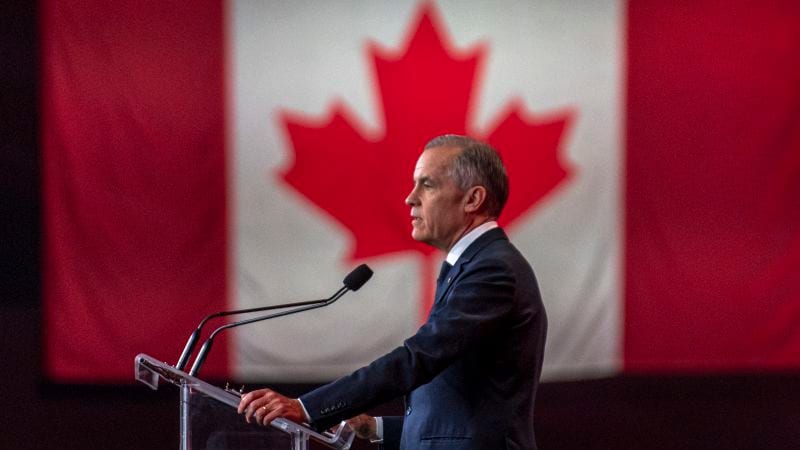
Key facts
- Canada has suspended trade negotiations with the United States.
- Canadian Prime Minister Mark Carney cited "unfair" last-minute changes to U.S. terms as the reason for suspending talks.
- Carney announced Canada would impose retaliatory tariffs on U.S. goods.
- The U.S. Trade Representative's office stated Canada declined to finalize previously agreed-upon terms.
- President Trump had previously paused tariffs for three days and announced a potential deal.
Trade negotiations between Canada and the United States have collapsed, leading Canadian Prime Minister Mark Carney to suspend talks and announce retaliatory tariffs. The breakdown occurred late Friday, just as U.S. tariffs of 50% on approximately $20 billion of Canadian goods were set to take effect at midnight.
Carney stated that last-minute changes to the U.S. proposed terms were "unfair, uneconomic, and undermined the net benefits for Canada," and called into question the reliability of any deal. He specifically mentioned an attempt by the U.S. to limit Canada's trade deals with other countries. As a result, Carney directed Canadian negotiators to return to Ottawa and vowed "dollar-for-dollar" retaliation, with measures set to take effect September 8, targeting steel, dairy, appliances, agricultural equipment, pulp, paper, and electronics.
The Office of the U.S. Trade Representative (USTR) offered a contrasting account, asserting that Canada declined to finalize terms previously agreed upon earlier in the week. USTR Jamieson Greer stated that new demands and walk-backs of commitments by Canada had disrupted the balance. Greer indicated that the U.S. had offered significant tariff reductions on steel, aluminum, autos, and lumber, alongside an economic and national security partnership. He added that the U.S. would proceed with countermeasures in response to Canada's planned retaliation, with no new talks currently scheduled.
Earlier in the week, President Trump had expressed optimism about reaching a deal, even pausing the tariffs for three days. However, the finalization of documents proved elusive. This latest trade dispute marks a continuation of deteriorating trade relations since Trump's return to office, which has previously seen tariffs imposed on Canadian autos, steel, and aluminum, met with reciprocal measures from Canada.