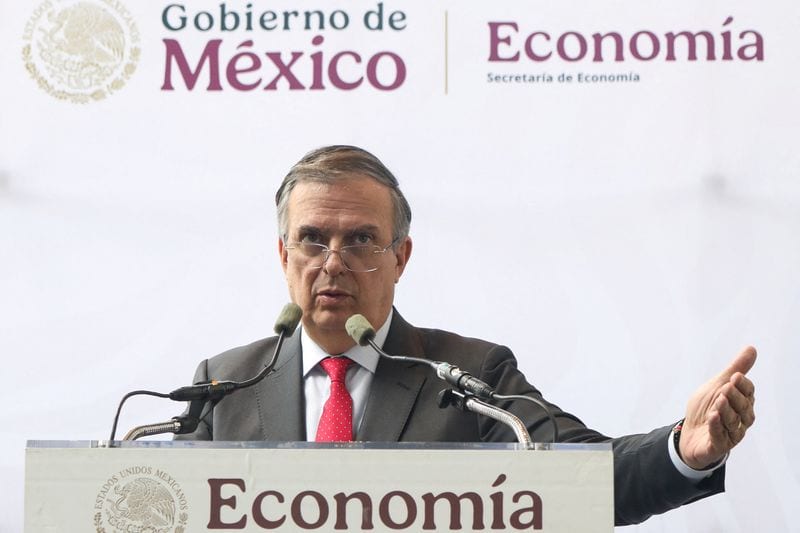
Mexico anticipates reaching trade agreements with the United States that bear significant resemblance to the terms being discussed between Washington and Ottawa, according to Mexican Economy Minister Marcelo Ebrard. Ebrard stated on Friday that Mexico does not perceive Canada's parallel negotiations as a competitive process, emphasizing that Mexico is charting its own course in discussions with the U.S.
Mexico will conduct a full assessment of any U.S.-Canada arrangement once the final terms are published. These comments emerge as the U.S. and Canada are striving to conclude a tentative agreement, which prompted President Donald Trump earlier this week to halt planned 50% tariffs on various Canadian goods.
Canadian Prime Minister Mark Carney indicated substantial progress had been made, though he cautioned that considerable work remained. The U.S.-Canada negotiations are primarily focused on averting new Section 338 tariffs and resolving bilateral trade disputes. These include U.S. grievances regarding Canada's dairy quota system, provincial limitations on U.S. alcohol sales, and retaliatory Canadian duties on certain U.S.-built autos and steel. Negotiators are also working to reconcile differences concerning potential reductions in U.S. auto tariffs.
These discussions, while separate, are politically linked to the broader 2026 review of the U.S.-Mexico-Canada Agreement. In July, the Trump administration opted not to extend the pact for another 16-year term, initiating a series of annual reviews. The agreement remains effective through 2036 unless the three nations mutually agree to an extension.
U.S. Trade Representative Jamieson Greer has expressed hope for securing interim arrangements with both Mexico and Canada within the current year, deferring more complex issues like automotive rules of origin, labor, and environmental standards to 2027. Mexico has characterized recent discussions with Washington as constructive, noting advancements in areas such as steel, aluminum, and initiatives to substitute Asian imports with increased North American production.