Key facts
- The U.S. Army awarded Skyeton Inc. a $10.64 million contract for Raybird reconnaissance drones.
- The Raybird drone is designed for long-range missions and has been used extensively in Ukraine.
- Skyeton estimates intelligence from Raybird drones has helped destroy billions of dollars worth of Russian military equipment.
- A Russian attack on May 14, 2026, destroyed Skyeton's office in Kyiv.
- Slovak police detained three foreign nationals in August 2026 over an alleged plot to set fire to a Skyeton drone factory in Slovakia.
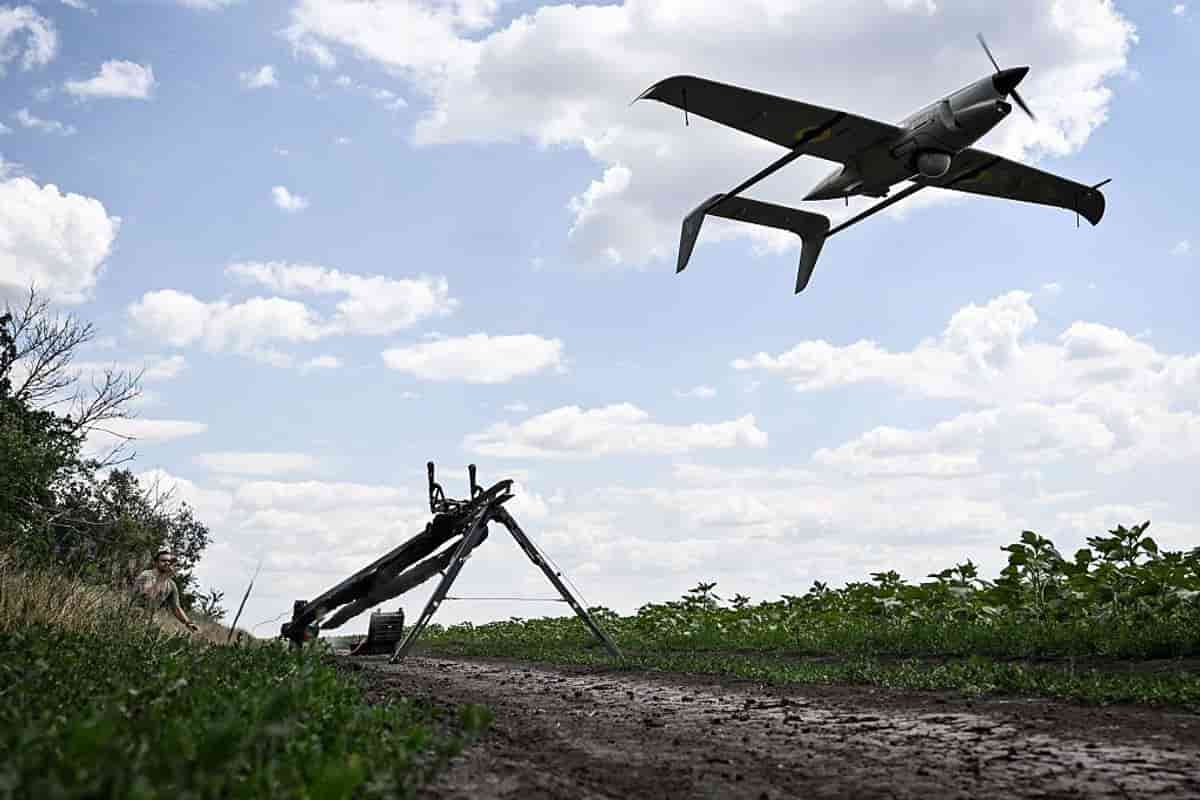
The U.S. Army has awarded a $10.64 million contract to Skyeton Inc., the American subsidiary of Ukrainian drone manufacturer Skyeton, for Raybird reconnaissance drones and associated services. The contract was disclosed by the Department of Defense on September 18, 2026.
The Raybird is a Ukrainian-developed fixed-wing drone designed for long-range reconnaissance missions and has been a significant asset on the battlefield in Ukraine. According to Skyeton, the drone can stay airborne for up to 24 hours and cover distances of up to 2,500 kilometers (1,550 miles). The company claims that Raybird systems have accumulated over 350,000 combat hours since the start of Russia's full-scale invasion, and the intelligence gathered has reportedly helped destroy billions of dollars worth of Russian military equipment.
Skyeton itself has faced targeting. Its Kyiv office was destroyed in a Russian attack on May 14, 2026, though the company stated its production facilities were dispersed, allowing deliveries to continue. In August 2026, Slovak police detained three individuals in connection with an alleged plot to set fire to a Skyeton factory in Slovakia. A company representative indicated that Russian actors had repeatedly targeted its production and reputation.
This U.S. purchase aligns with Washington's efforts to integrate lessons learned from the rapidly evolving drone warfare in Ukraine. Earlier in September, the U.S. Army disbanded a specialized drone warfare unit within the 173rd Airborne Brigade, a move that drew objections from lawmakers concerned about the military's ability to learn from Ukrainian experiences. Nevertheless, the Army continues to integrate drones and related tactics, with Ukrainian personnel recently embedded with U.S. forces during Saber Junction exercises in Germany, where approximately 1,900 drones were used.