Key facts
- A Ukrainian Sargan-3000 drone boat destroyed a Russian Orcan surface drone in the Black Sea on September 12.
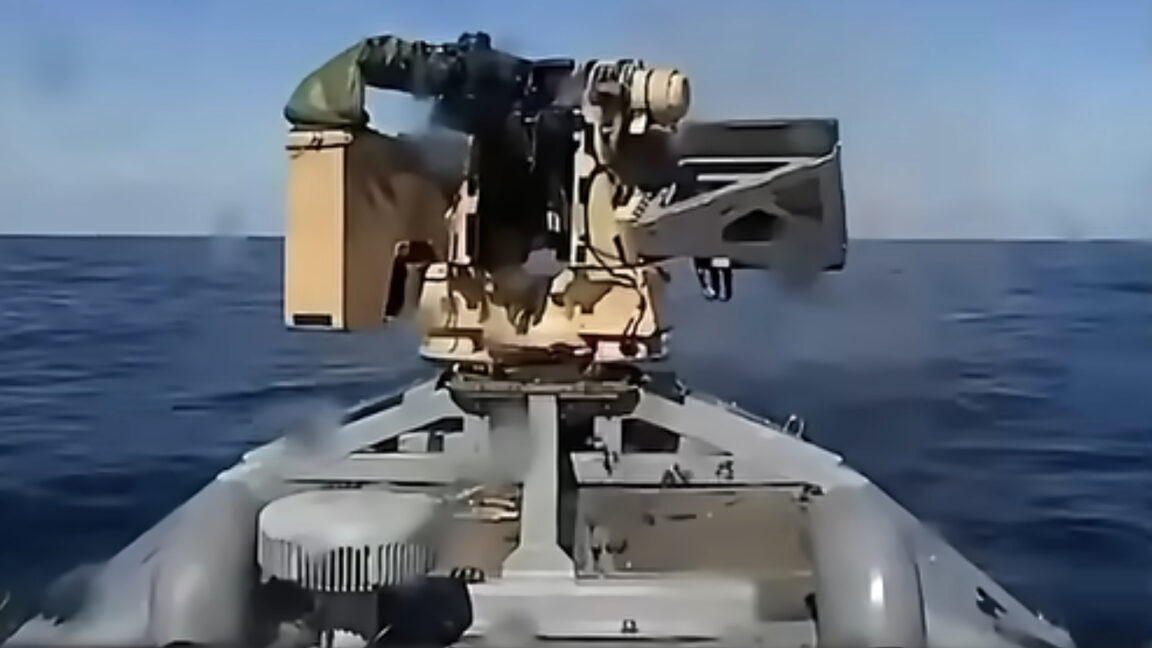
- The Ukrainian drone used a remote-controlled 12.7mm machine gun to sink the Russian vessel.
- The Russian Orcan drone was designed as an explosive ramming craft.
- The Ukrainian Sargan-3000 can reach speeds of 40-55 knots and travel up to 1,600 kilometers.
- Ukraine has used drone boats to attack Russian naval targets, including a border patrol ship in July 2026.
In what is described as the world's first clash between drone boats, a Ukrainian naval drone successfully destroyed a Russian explosive drone boat in the Black Sea on September 12. The Ukrainian Sargan-3000 drone boat intercepted and engaged the Russian Orcan surface drone, which was designed for ramming attacks and exploding.
According to naval analyst HI Sutton, the battle occurred as Ukraine's Defense Intelligence detected the Russian vessel. The Ukrainian drone, equipped with a remote-controlled 12.7mm machine gun turret made by Kongsberg, fired on the Russian drone from a distance of one kilometer. The Ukrainian Navy released video footage showing the drone disabling the Russian vessel's communications antenna before riddling it with gunfire until it sank.
Sutton noted that such drone boat-on-drone boat combat was inevitable, drawing parallels to aerial and ground engagements. The Orcan drones have previously been used by Russia to attack Ukrainian ports and ships, often in coordination with flying drones for reconnaissance and communication.
The Ukrainian Sargan-3000 is described as capable of reaching speeds of 40 to 55 knots and traveling up to 1,600 kilometers with a 450-kilogram payload. The Ukrainian Navy has also claimed that a similar drone successfully struck and sank a Russian border patrol ship named the Izumrud in July 2026.
Ukraine has heavily invested in drone boat technology as part of its asymmetric warfare strategy against Russia's Black Sea Fleet, leading to the sinking of some Russian warships and forcing others to remain in port. These drones have also been used to target Russian oil and gas shipments and supply lines to Crimea.
Naval drone innovations have also seen Ukraine deploy ground robots from drone boats and use uncrewed surface vessels as motherships for FPV drones. Russia has responded by deploying its own naval drones against Ukrainian targets. Similar naval drone threats have been observed in other conflicts, including a Russian drone boat being disabled by a Romanian fighter jet near a natural gas platform in August, and US drone boats participating in operations against Iran.