Key facts
- Ukraine's attacks destroyed the road section of the Crimean Bridge and forced a suspension of rail traffic, Reuters reported.
- Analysts John Helin and Franz-Stefan Gady said the strikes add to pressure on Russian logistics rather than change the battlefield outright.
- Gady said Russia would likely avoid a sudden logistical breakdown by dispersing traffic and driving at night.
- An Azov officer said the unit struck 100 locomotives and destroyed 600 tonnes of fuel in its sector, figures Reuters could not verify.
- Putin said the bridge was used exclusively for civilian purposes and promised to hit back hard.
- Russia built the 19-km road and rail bridge to link its mainland with Crimea, which it annexed in 2014.
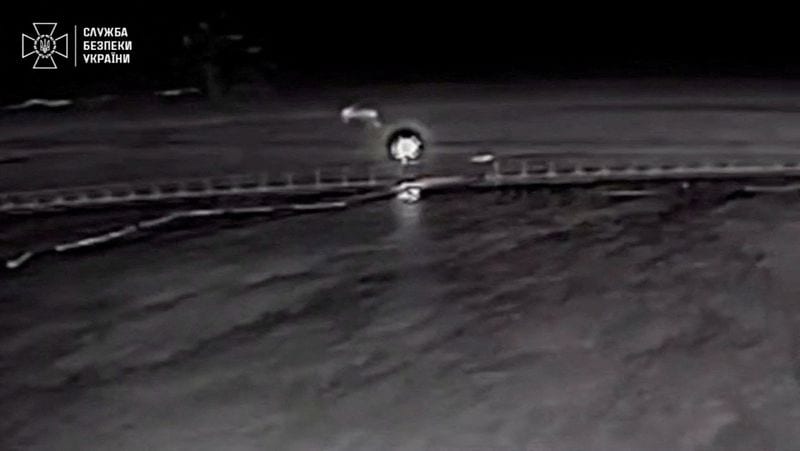
Ukraine's partial destruction of the bridge to Crimea extends a months-long campaign to cut Russian supply lines to southern and eastern Ukraine and the occupied peninsula, two analysts and two Ukrainian commanders said. The attacks during the week before November 20, 2026 destroyed the bridge's road section, and a strike on Thursday, the third that week, forced a suspension of traffic on the rail section. Russian officials gave no other details.
Putin said on Thursday the bridge was being used exclusively for civilian purposes and promised to hit back hard. A Russian ballistic-missile attack on the Ukrainian capital overnight damaged three bridges across the Dnipro River, city officials said on Friday.
John Helin, a visiting fellow at the Atlantic Council, said the more important development is the growing pressure on Russia's logistics system as a whole, not the bridge damage itself. Franz-Stefan Gady, a Vienna-based expert with the Center for a New American Security, said Russia now has few alternatives but to route more traffic through the heavily targeted M-14 highway, adding that a sudden logistical breakdown remained unlikely because Russia disperses traffic and drives at night.
A commander of a Ukrainian drone unit operating over the highway, who asked not to be named for security reasons, said he expected Russia to strengthen air defenses there but was confident Kyiv's forces could keep doing damage. He cited rain and heavy cloud cover as the main constraint.