Key facts
- Taiwan's defense ministry said the two Tu-95s, known by NATO as Bears, entered its Air Defense Identification Zone on November 19.
- The ministry said the aircraft exited airspace around Taiwan to the island's northeast, off the port city of Keelung.
- Taiwan's armed forces used joint intelligence, surveillance and reconnaissance means to monitor the activity and responded appropriately, the ministry said.
- Russia's defense ministry did not respond to requests for comment on the flights.
- Security scholar Ian Storey said the last known Russian strategic airpower deployment to Vietnam was in 2014.
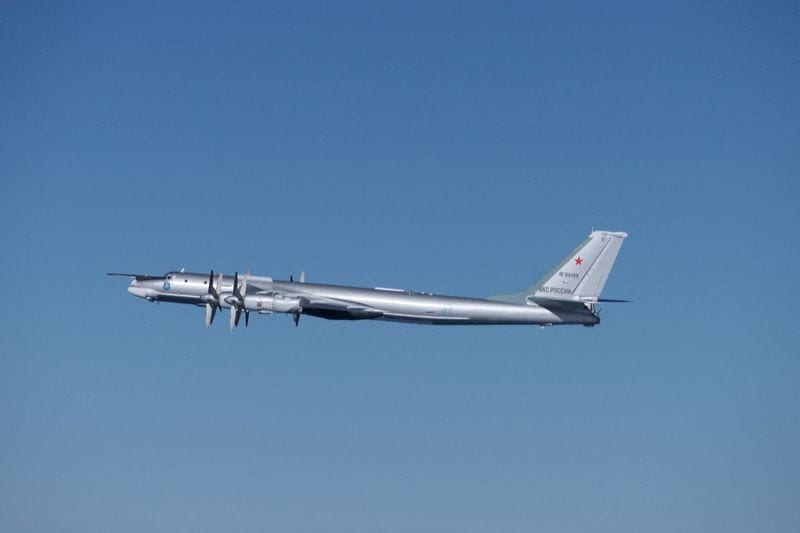
Taiwan's defense ministry said two Russian military Tu-95 aircraft flew to the island's east on November 19 after approaching from the south, the second time in a week it has reported such activity. The ministry said the two Tu-95s, known by NATO as Bears, entered Taiwan's Air Defense Identification Zone and then exited airspace around Taiwan to the island's northeast, off the port city of Keelung. It published a picture of one of the aircraft it said was taken from a Taiwanese F-16 fighter.
Taiwan's armed forces used joint intelligence, surveillance and reconnaissance means to monitor the full course of the activity and responded appropriately, the ministry said in a short statement. Taiwan said on November 17 that two Russian military aircraft had flown in a southerly direction down its east coast, and Japan reported the same activity that day and published a map showing the aircraft flying down Taiwan's east coast.
The flights have come as Russian President Vladimir Putin is in China's Shenzhen for the APEC summit, where he will also hold a trilateral meeting with Chinese President Xi Jinping and US President Donald Trump. Russia's defense ministry has not responded to requests for comment.
Russia flew two Tu-95 strategic bombers south from its Far East on November 17, flanked by two long-range tankers, and the aircraft remained at Danang airport in Vietnam on November 18. Ian Storey, a security scholar at Singapore's ISEAS-Yusof Ishak Institute, said the deployment was intended to remind regional states that Moscow can still project power into Southeast Asia despite the war in Ukraine. He said the last known deployment of Russian strategic airpower to Vietnam was in 2014.