Key facts
- Kremlin aide Yuri Ushakov said the war in Ukraine dominated the Putin-Trump meeting on November 19.
- Ushakov said the leaders also discussed bilateral ties and their planned meeting with Xi Jinping.
- Ushakov said Putin's mood after the meeting was "simply excellent".
- Kremlin spokesman Dmitry Peskov said one hour was allocated for the three-way meeting with Xi.
- The White House has said Trump plans to discuss nuclear arms and the war with Iran, not Ukraine.
- Analysts say the gathering is unlikely to yield major agreements, given differences over Ukraine, Iran, nuclear weapons and trade.
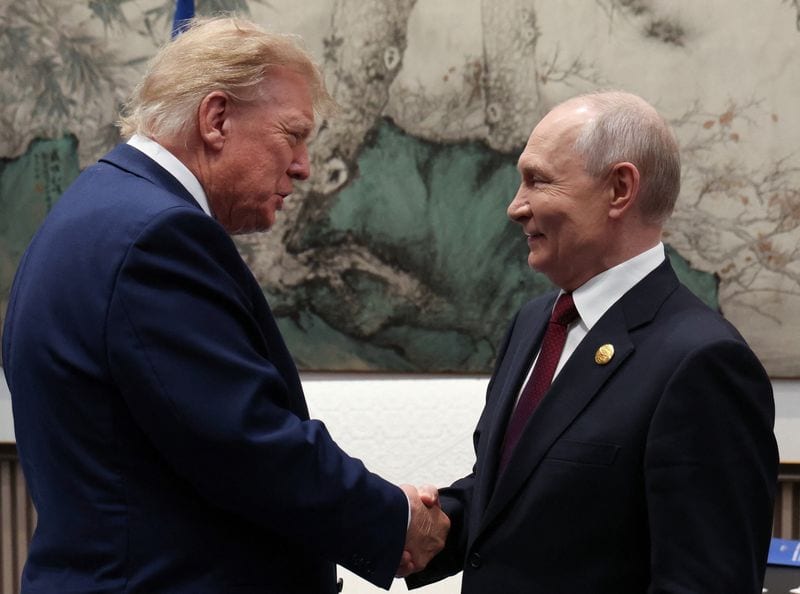
Russian President Vladimir Putin and US President Donald Trump met on the sidelines of the Asia-Pacific Economic Cooperation summit in Shenzhen on November 19, and the war in Ukraine dominated their discussion, Kremlin foreign policy aide Yuri Ushakov said.
Ushakov said the two leaders also discussed bilateral ties and their planned joint meeting with Chinese President Xi Jinping during the summit. He said Putin's mood after the meeting was "simply excellent".
The Kremlin had said the Putin-Trump meeting would follow the APEC plenary session, with no full-scale bilateral negotiations planned, Russian news agencies reported. Kremlin spokesman Dmitry Peskov said one hour had been allocated for the three-way meeting with Xi.
The White House has said Trump plans to discuss nuclear arms and the war with Iran at the three-way meeting, and that Ukraine is not expected to be on that agenda, though Trump has suggested he could raise it. Trump last met Putin in Alaska in 2025 for talks that failed to end the war.
Canadian Prime Minister Mark Carney gave cautious backing to the planned three-way meeting, saying Canada is in favor of denuclearization and calling the initiative positive, Politico Europe reported on November 18. Trump and Putin met in person for the first time since August 2025 as Trump arrived in Shenzhen, the BBC reported.
Analysts say the gathering of the leaders of the world's largest nuclear powers is unlikely to yield major agreements, given deep differences over Ukraine, Iran, nuclear weapons and trade.