Key facts
- Putin said Yalta simply acknowledged the realities that emerged after World War Two and codified existing reality.
- Putin said that in current conflicts Russia would also have to come to terms with realities on the ground.
- Ukrainian foreign minister Andrii Sybiha wrote on X that Shenzhen is not the Yalta of Putin's dreams.
- Sybiha said a Ukrainian attack had just knocked out the Crimean Bridge, which connects Russia to the peninsula.
- The Kremlin had said before the Shenzhen meeting that comparisons to Yalta were games of political scientists.
- The Shenzhen summit ended in less than two hours with a five-paragraph peace declaration.
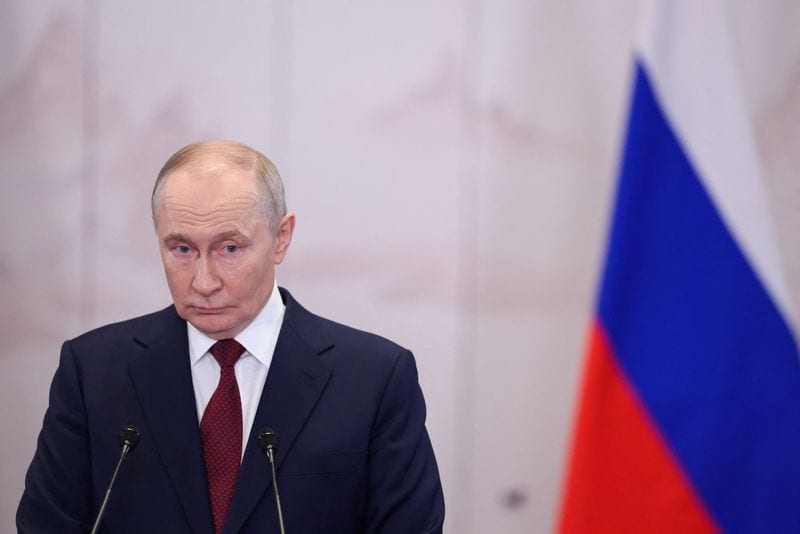
Russian President Vladimir Putin said on November 19 that the three-way summit with Donald Trump and Xi Jinping in Shenzhen did not aim to carve the world into spheres of influence, rejecting comparisons to the 1945 Yalta Conference, Reuters reported.
Some of Ukraine's allies had expressed concern that the meeting between the leaders of Russia, the United States and China would attempt to replicate Yalta, where the Soviet Union, Britain and the US set terms for the post-war global order. That summit is scorned in much of Eastern Europe as a betrayal that ratified Moscow's dominance over countries occupied by Soviet troops.
Asked about the comparison by a reporter, Putin said: "I want to emphasise this, and I want it to be perfectly clear: there was no division of the world into 'spheres of influence' at Yalta. Yalta simply acknowledged the realities that had emerged in the wake of the Second World War." He added: "Yalta merely codified the existing reality. And in today's conflicts, too, we will have to come to terms with the realities on the ground."
With Russian forces controlling about a fifth of Ukraine, Putin has frequently used the phrase "realities on the ground" to press for peace terms that Kyiv says would amount to its capitulation. Putin also said Yalta had "formalised the victory over Nazism" and that something similar would be welcome now, an allusion to his demand for the "denazification" of Ukraine, which Kyiv rejects as a baseless justification for the 2022 invasion.