Key facts
- HUR named Cl. Fedor Zubakov as the officer who planned the November 2 strike on Komyshuvakha.
- HUR identified six Russian pilots it alleges carried out the bombing and said a seventh crew is still being identified.
- At least four Russian Su-34 fighter-bombers were involved in the operation, according to HUR.
- Local authorities said at least 55 people were killed and more than 50 remain missing after the strike.
- One of the bombs was a 3-ton FAB-3000 containing more than 1,000 kilograms of explosives, according to the report.
- Authorities reported 785 Russian strikes on 51 settlements across Zaporizhzhia Oblast in one day on November 6.
Ukraine's military intelligence (HUR) said on November 7 that it had identified Russian military personnel it alleges were involved in a November 2 airstrike on a school in Komyshuvakha, Zaporizhzhia Oblast, where civilians were receiving humanitarian aid. HUR named Cl. Fedor Zubakov, head of the fire-strike planning group at the headquarters of Russia's Dnepr Group of Forces, as the officer who planned the attack. It also identified six Russian pilots it alleges carried out the bombing: Cpt. Sergei Yeliseyev, Cpt. Dmitry Zverev, Sr. Lt. Rodion Plotnikov, Sr. Lt. Nikita Ignatyev, Sr. Lt. Maksim Sokolenko and Lt. Vadim Perekhrest. The crew of a seventh aircraft is still being identified, HUR said. At least four Russian Su-34 fighter-bombers were involved, according to the agency.
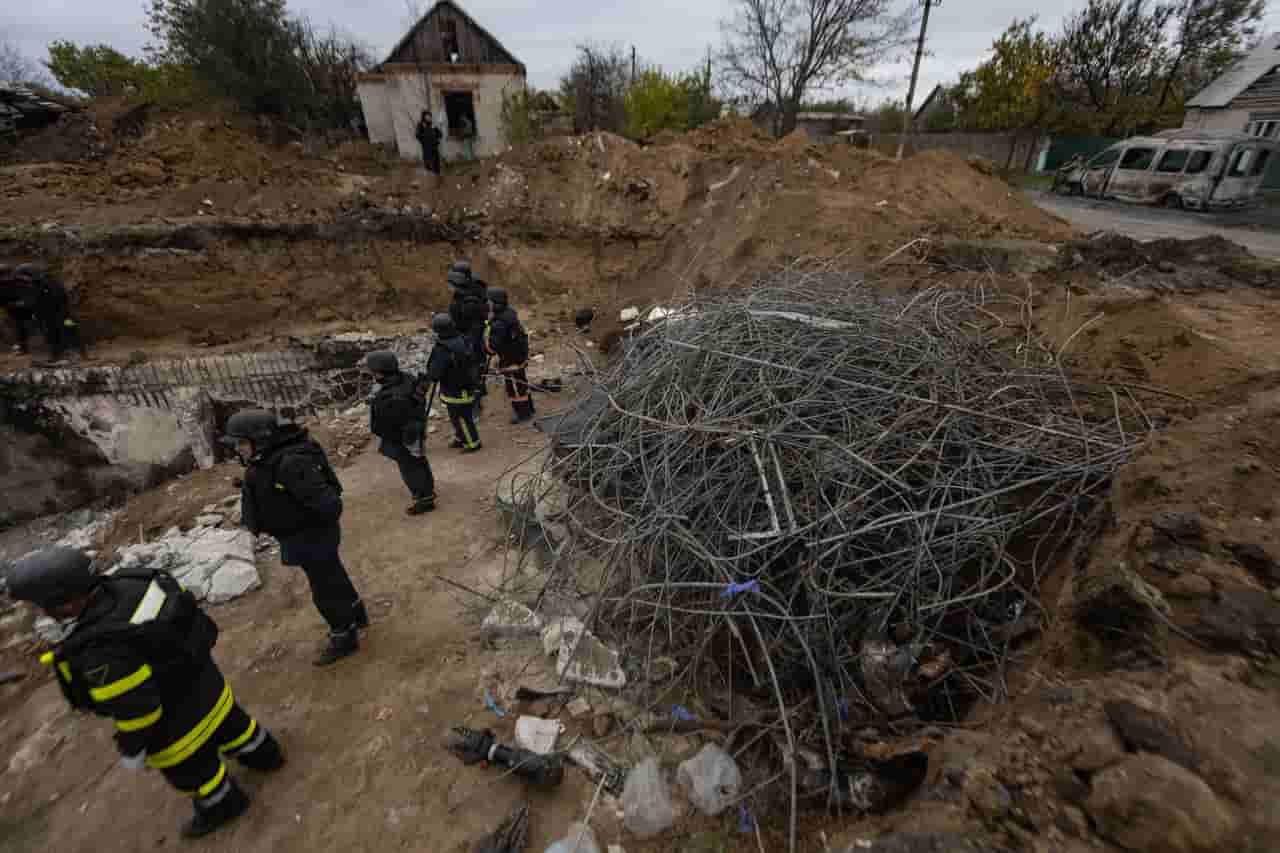
Local authorities said at least 55 people were killed and more than 50 others remain missing. Search and rescue operations at the site have continued for six days, with the final death toll yet to be established. Russian forces struck the front-line village several times on November 2, initially hitting an underground school where local residents had gathered to receive humanitarian aid. One of the bombs was a 3-ton FAB-3000, containing more than 1,000 kilograms of explosives.
HUR said it had identified those involved as part of efforts to document Russian war crimes. President Volodymyr Zelensky said on November 4 that there had been very little reaction from the international community to the "insane attack" in Komyshuvakha, and called for air defense support. Oleksandr Kovalenko, a spokesperson for the Zaporizhzhia Oblast Military Administration, told the Kyiv Independent that rescuers can work for only 15 to 20 minutes at a time before Russian drones and the threat of guided aerial bombs force them to withdraw. The attack destroyed what Kovalenko described as the only relatively safe place left in the settlement, an underground facility where residents could shelter and receive humanitarian aid.
Authorities reported on November 6 that Russian forces carried out 785 strikes on 51 settlements across Zaporizhzhia Oblast in one day. Settlements 5 to 15 kilometers (about 3 to 9 miles) from Russian positions face near-constant drone, artillery and aerial bomb attacks, according to the report.