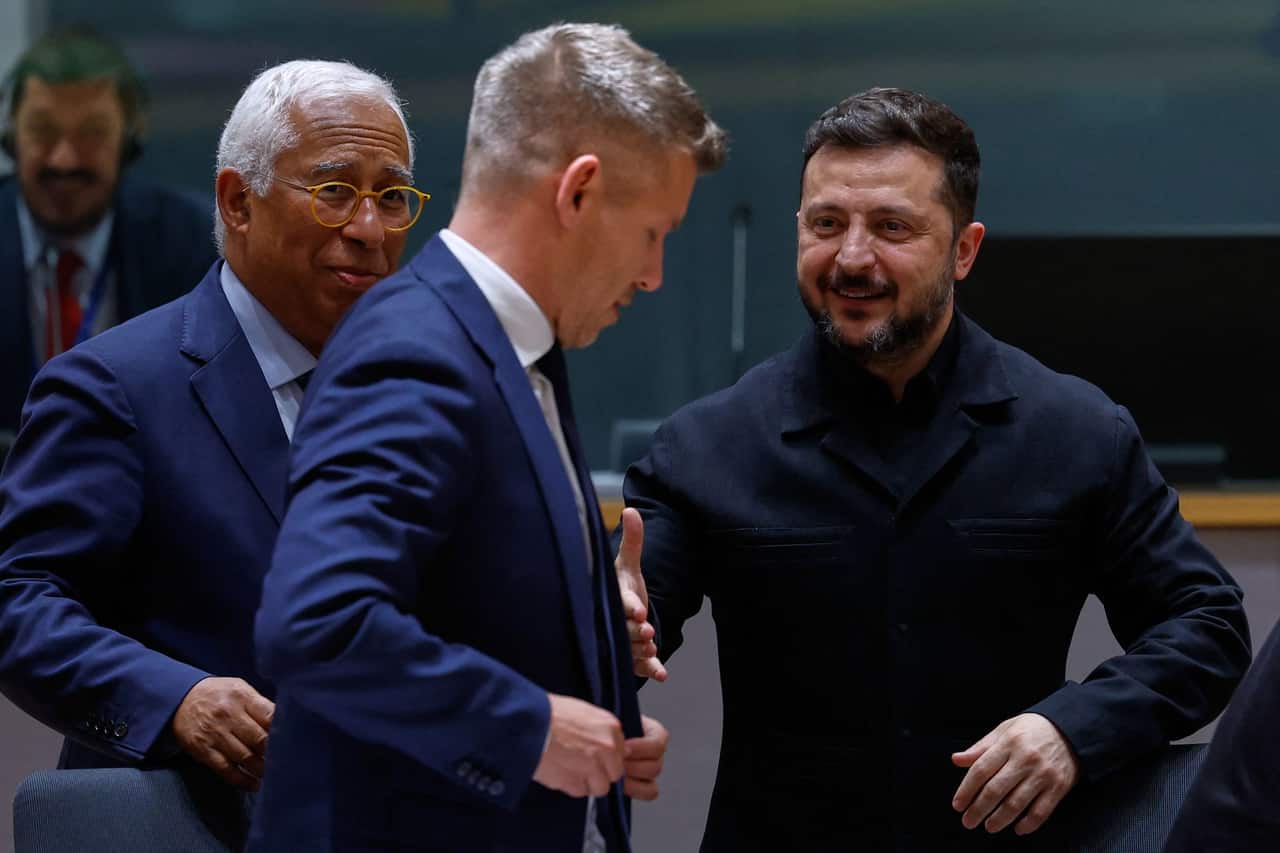
Ukraine's parliament on Oct. 1 registered a draft law aimed at expanding the provision of education for national minorities, a move intended to appease Hungary and potentially unblock Kyiv's European Union membership bid. The bill, slated for a vote on Oct. 12, addresses a primary demand from the Hungarian government, which has previously vetoed aspects of Ukraine's EU accession process.
Hungarian Prime Minister Peter Magyar emphasized the right of minorities to receive education in their mother tongue, while Foreign Minister Anita Orban acknowledged the collaborative work between Hungarian and Ukrainian experts on the legislation. The proposed law would enhance the use of minority languages, including Hungarian, in educational settings for Ukraine's ethnic Hungarian population, estimated at 80,000 in the Zakarpattia Oblast, and other EU-language national minorities. Schools with a majority of students studying in a minority language could receive special status, requiring the head or deputy head to be proficient in that language.
The bill's wording specifically refers to "the language of a national minority of Ukraine, which is an official language of the European Union," distinguishing it from Russian, which is not an EU official language. This distinction is intended to prevent the promotion of the Russian language.
Ukraine hopes that the law's passage will revitalize its stalled EU accession talks. EU officials aim to open all six reform clusters for Ukraine by the end of 2026. While the European Commission deems Ukraine technically ready for all clusters, political objections have limited progress. The passage of this law could facilitate the opening of clusters two and three, which cover broad economic reforms, though concerns from countries like Poland regarding agricultural and trucking sector competitiveness may still arise for later clusters.