Key facts
- Nearly three-quarters of U.S. and local electronics companies in Malaysia plan to increase investment.
- Amcham's Economic Impact Survey (EIS) 2022/23 surveyed 81 companies, including 65 American multinational companies.
- Electrical and electronics (E&E) manufacturers were among the largest respondent groups in the survey.
- Foreign direct investment from these MNCs amounted to RM172.6 billion as of end-2023.
- The surveyed companies employed 148,778 individuals, with 89% being Malaysians.
- 60% of American manufacturing companies are planning additional investments in the next five years, according to Minister Tengku Zafrul.
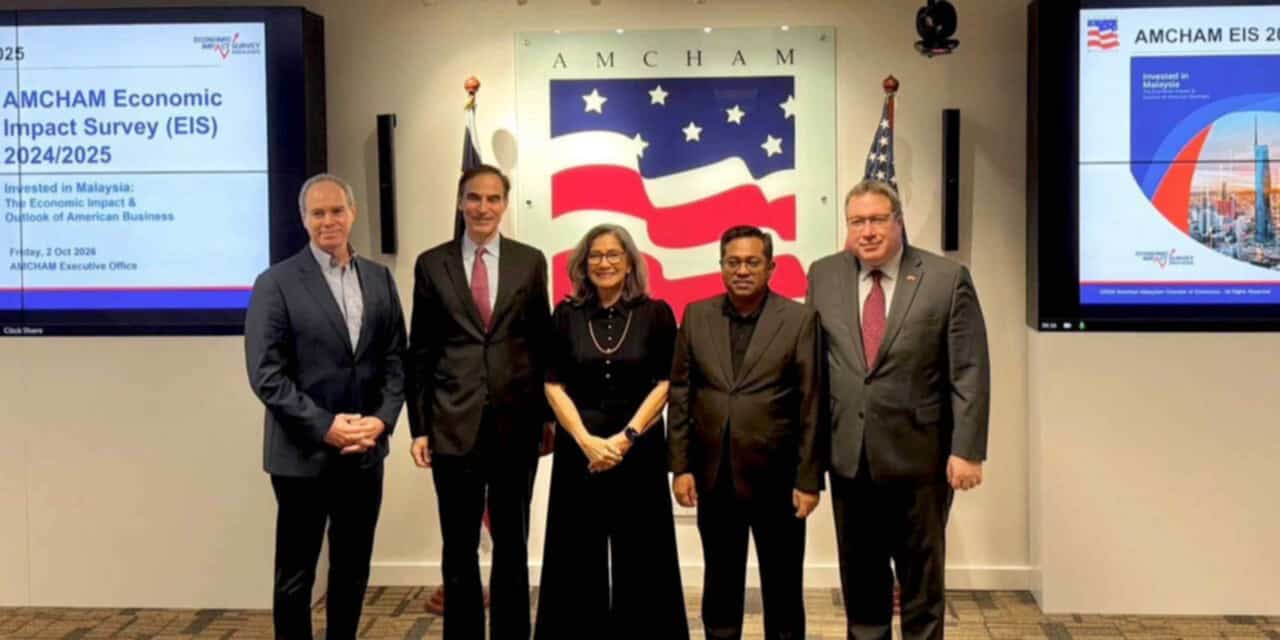
Nearly three-quarters of U.S. and local electronics companies operating in Malaysia plan to increase investment in the country, according to a survey released Friday by the American Malaysian Chamber of Commerce (Amcham). The findings underscore Malaysia's growing presence as a technology investment destination.
The biennial Economic Impact Survey (EIS) 2022/23 saw 81 companies participate, with 65 being American multinational companies (MNCs). Among the respondents, half were manufacturing companies, with electrical and electronics (E&E) manufacturers forming a significant group. The survey indicated that these MNCs' foreign direct investment (FDI) amounted to RM172.6 billion as of the end of 2023, reflecting a long-standing commitment to Malaysia dating back to the 1950s.
Amcham chairman Antony Lee stated that the commitment from American MNCs remains strong, highlighting their continued investment regardless of economic conditions. The surveyed companies collectively employed 148,778 individuals, 89% of whom are Malaysians, and contributed RM307.7 billion in salaries. They also contributed RM1.3 billion to the Employees Provident Fund (EPF) and The Social Security Organisation (Socso).
Amcham CEO Siobhan Das noted Malaysia's competitiveness compared to neighboring countries and credited government initiatives like the New Industrial Masterplan (NIMP) 2030 for attracting investors. Former International Trade and Industry deputy minister Ong Kian Ming pointed to projects like the Johor Singapore Economic Zone (JS-SEZ) and the Johor Bahru–Singapore Rapid Transit System (RTS) as further investment drivers, alongside policies such as the National Energy Transition Roadmap (NETR) which could spur investments in areas like solar farms.
MITI Minister Tengku Datuk Seri Zafrul Abdul Aziz welcomed the survey's findings, stating that U.S. manufacturing companies' investments to date have contributed significantly to Malaysia's exports and provided spillover impacts to local companies. He also noted that 60% of American manufacturing companies are planning additional investments in the next five years, signaling a potential uptick for the Malaysian E&E industry, especially with the incorporation of artificial intelligence into business activities.