Key facts
- IMF-World Bank annual meetings in Bangkok will focus on the Middle East war and global debt.
- World Bank President Ajay Banga noted pressures building due to Iran closing the Strait of Hormuz.
- IMF Managing Director Kristalina Georgieva warned of impending economic challenges.
- Global public debt is at its highest level since World War Two, projected to exceed 100% of GDP by 2030.
- Developing countries face renegotiating high debt levels at higher interest rates.
- Security is heightened in Bangkok due to Middle East tensions and flight route concerns.
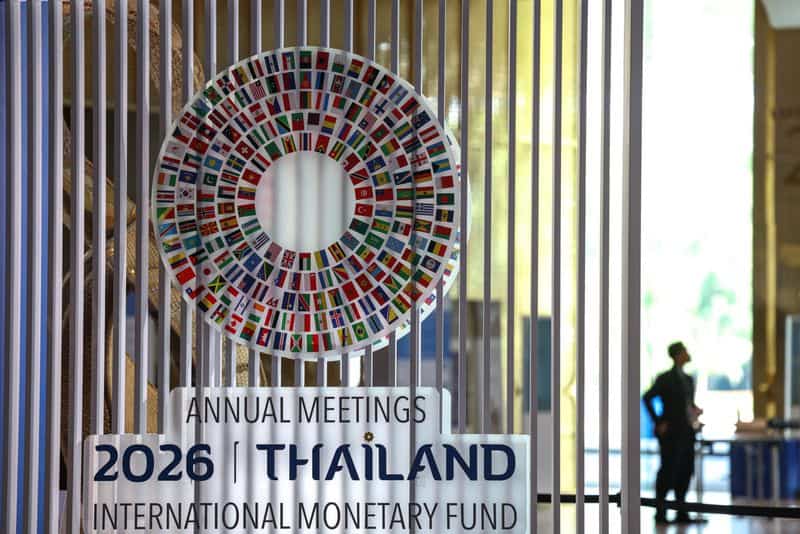
Finance officials from around the world are gathering in Bangkok for the annual meetings of the International Monetary Fund and World Bank, with the escalating war in the Middle East, a significant energy supply shock, and rising interest rates dominating discussions. These factors collectively pose substantial risks to already sluggish global economic growth.
World Bank President Ajay Banga indicated that while global growth had shown resilience, pressures are mounting, exacerbated by Iran's closure of the Strait of Hormuz, which halted about 20% of the world's oil supply. He highlighted the combined impact of soaring diesel and fertilizer prices, and a looming 'super' El Niño weather event, which experts predict could lead to a significant number of heat-related deaths.
The IMF's Managing Director, Kristalina Georgieva, echoed these concerns, warning of difficult times ahead. While the IMF's forecast for 3% global growth in 2026 remains unchanged, some countries, including Ukraine and Gulf nations affected by Iranian actions and reduced energy exports, may see downgrades. Research from the IMF indicates that sharp increases in food and energy prices are increasingly a source of crises, driving inflation expectations and exacerbating poverty.
A major concern for policymakers is the escalating public debt burden, which the IMF states is at its highest level since World War Two and is projected to exceed 100% of GDP before 2030. Advanced economies, particularly the United States, carry the highest debt-to-GDP ratios, but emerging markets and low-income countries are especially vulnerable due to capital outflows seeking higher US rates, the El Niño effect, and a lack of investment in AI.