Key facts
- Syria raised diesel prices 40% to 175 Syrian pounds per liter and gasoline prices by up to 28%.
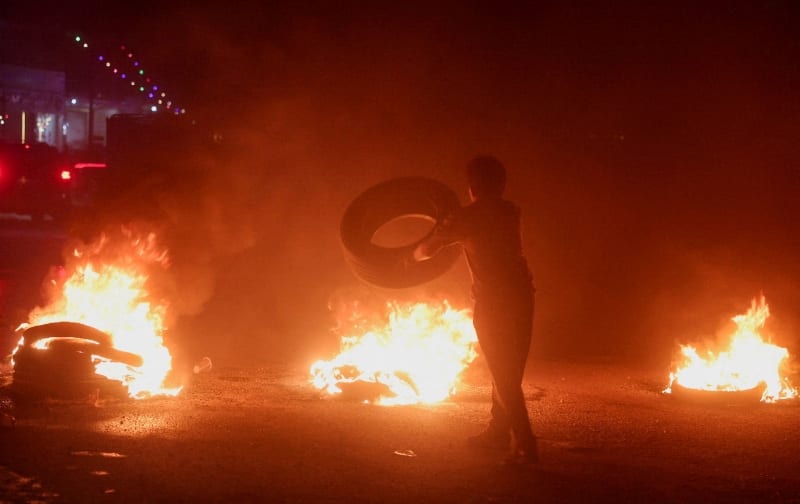
- Protests erupted across Syria, blocking roads and demanding ministerial resignations.
- The price hikes are the most widespread unrest since Bashar al-Assad's fall in December 2024.
- The Baniyas refinery, Syria's largest, closed for a three-month overhaul, reducing domestic refining capacity.
- Syria relies on imports for about 60% of its diesel supply, with global prices above $100 a barrel.
Syria's government has sharply increased fuel and cooking gas prices, triggering widespread protests across the country, the most extensive since the toppling of Bashar al-Assad nearly two years ago. Demonstrators blocked major roads, burned tires, and called for the energy minister's resignation as anger grew over the rising cost of living.
Protests were reported in Hama, Khan Sheikhoun, Maarat al-Numan, and along the highway linking Damascus to Aleppo and the road to Turkey. Crude tanker convoys bound for refineries were halted en route. The government's new pricing bulletin, effective Sunday, set 95-octane gasoline at 195 Syrian pounds ($1.60) per liter, a 28% increase, and 90-octane gasoline at 185 Syrian pounds ($1.52) per liter, a 26% increase. Diesel saw the steepest rise, climbing 40% from 125 SYP to 175 SYP per liter.
Energy Minister Mohammed al-Bashir cited international market pressures and domestic supply constraints, including ongoing maintenance at the Baniyas refinery, Syria's largest fuel-processing plant. The country produces about 102,000 barrels of oil a day against domestic demand of roughly 325,000 barrels, relying on imports of about 60,000 barrels a day of Russian crude. Ukrainian attacks on Russian refineries have cut that output and pushed Moscow to restrict diesel and gasoline exports, tightening the supply reaching Syria just as domestic refining capacity fell. The Baniyas refinery closed this month for a three-month overhaul, its first comprehensive maintenance since Assad's fall.
The UN Development Programme estimates 90% of Syrians now live below the poverty line, up from about a third before the 2011 civil war. The U.S. has backed a $5.7-billion, 1,000-mile pipeline from Basra to Baniyas, led by Chevron with TotalEnergies and Syrian and Qatari investors, that would carry 2 million barrels a day. Iraqi refineries already truck roughly 5,000 tankers of crude to Baniyas daily under an interim arrangement that began in April. Damascus has also retaken oil and gas fields in Deir ez-Zor and Hasakah from Kurdish-led forces this year.
The People's Assembly has summoned Minister al-Bashir to explain the reasons behind the price increases.