Key facts
- SpaceX is preparing for its 14th Starship test flight.
- The rocket will attempt to reach orbit for the first time.
- Starship will carry 26 Starlink V3 satellites.
- SpaceX is not planning to catch the booster on return.
- Both stages will splash down in bodies of water.
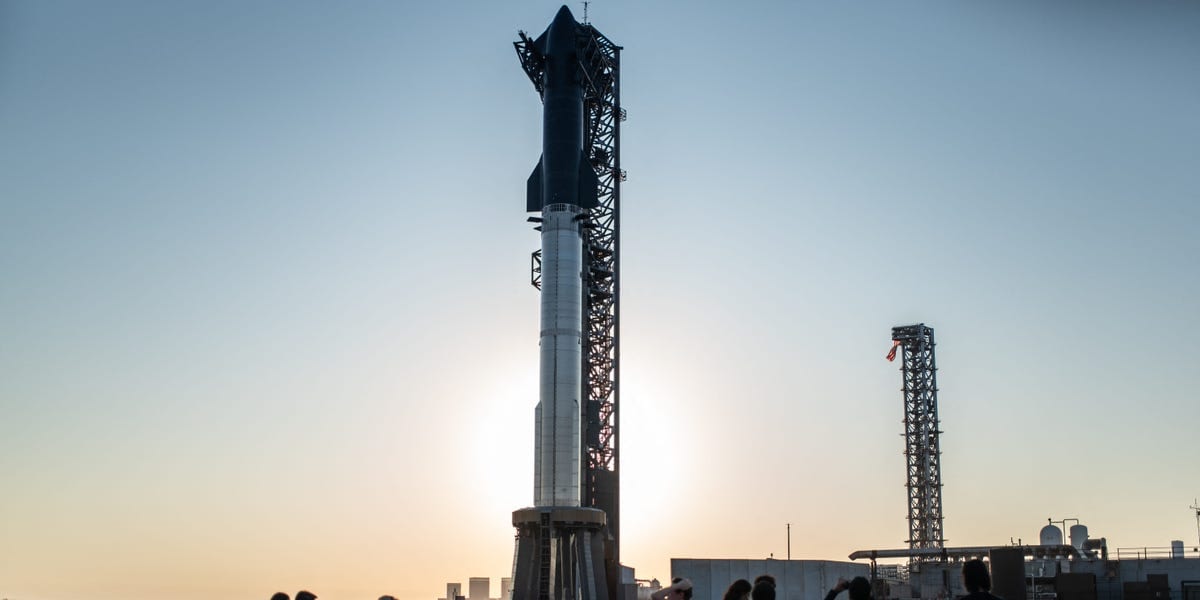
SpaceX is preparing for what it calls its most important Starship launch yet, scheduled for Monday around 7:46 am Central Time from its Texas launch site. This 14th test flight aims to see the 400-foot-tall rocket reach orbit for the first time and carry revenue-generating cargo. The payload includes 26 Starlink V3 satellites, the latest iteration of SpaceX's satellite internet service.
Unlike previous missions, SpaceX will not attempt to catch Starship's booster with its launch tower arms. Instead, both the booster and the upper stage are planned to splash down in the Gulf of Mexico and the Pacific Ocean, respectively. This approach, while reducing landing risks, introduces more potential failure points. Starship must successfully enter orbit, deploy its satellites, maintain system functionality for nearly 10 hours, and then execute a controlled deorbit and reentry.
Reaching orbit and deploying these satellites is a critical step for Elon Musk's vision for Starship, which he anticipates could launch daily within a year. The larger V3 satellites, enabled by Starship's greater capacity compared to the Falcon 9, will allow SpaceX to significantly expand its Starlink constellation. Starlink has become a major revenue source for SpaceX, which plans to launch up to 100,000 satellites in the coming years, potentially providing the majority of the world's internet within a decade. This expansion underpins SpaceX's $2 trillion market capitalization achieved after its June listing.
SpaceX executives estimate that Starship, designed to be fully reusable, could reduce launch costs by up to 10 times compared to the Falcon 9. This cost reduction is seen as vital for building and servicing massive satellite constellations profitably. It also paves the way for Musk's more ambitious plans, including deploying up to 1 million satellites as orbital data centers for training large language models, and supporting long-term human and robotic presence on the moon and Mars.