All NewsEducationTV
Equities & FundsCrypto & Digital AssetsAI & TechnologyBusiness & CorporateUS Politics & PolicyGeopolitics & Global RiskMacro, Rates & FXCommodities & EnergyEuropean Politics & MarketsAsia-PacificReal Estate & Property
All NewsHome
← Back to Asia-Pacific

South Korean progressives' "Park Chung-hee" coalition in the AI era

Created at 19 Aug · 8:11 PM1 source↑ Market-relevant
IN SHORT

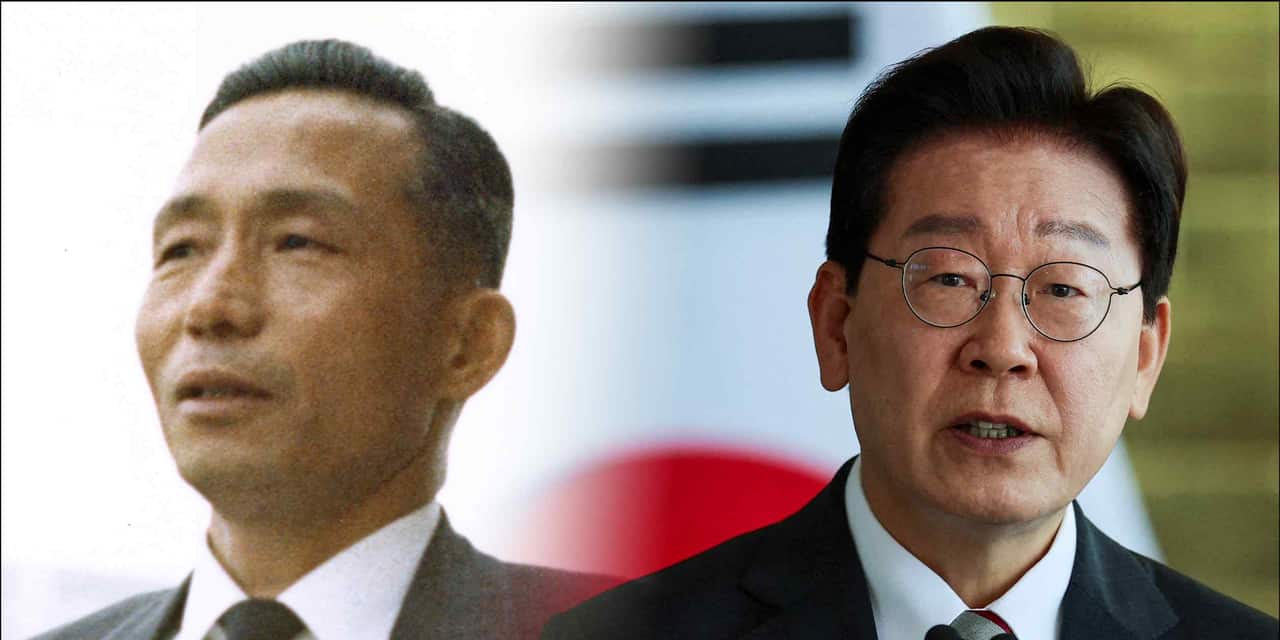
South Korean President Lee Jae Myung is urged to replicate the economic transformation achieved under Park Chung-hee, but without the authoritarian repression that characterized his rule. The nation's economic success is attributed to Park's strongman administration, which fostered technological innovation and growth.

Key Numbers

$1.64 trillionSouth Korea GDP in 2020
$40.9 millionSouth Korea GDP post-Korean War
1961-1979Park Chung-hee's administration period
1945-1948USAMGIK occupation period
1948-1953Korean War period
1953Year of Korean War armistice
1954-1961Period of significant foreign aid

Who's Involved

Park Chung-hee
President of South Korea from 1961-1979, credited with economic development
Lee Jae Myung
Current President of South Korea, tasked with economic transformation
Hyundai
South Korean multinational conglomerate
Samsung
South Korean multinational conglomerate
LG
South Korean multinational conglomerate
Syngman Rhee
First President of South Korea (1953-1960)
South Korean progressives' "Park Chung-hee" coalition in the AI era

↳ Why This Matters

The article highlights the historical context of South Korea's economic success under Park Chung-hee and poses a challenge for current leadership to replicate that growth in the modern AI era without resorting to authoritarian measures, underscoring the delicate balance between economic development and democratic freedoms.

Key facts

  • South Korea's economic development is attributed to President Park Chung-hee's administration (1961-1979).
  • Companies like Hyundai, Samsung, and LG are testaments to South Korea's economic growth.
  • South Korea's GDP increased significantly from post-Korean War levels to $1.64 trillion in 2020.
  • Foreign aid was critical for South Korea's economy in the 1950s.
  • President Lee Jae Myung is tasked with fostering economic transformation without authoritarianism.

South Korea's remarkable economic advancement, marked by global technology leaders like Hyundai, Samsung, and LG, has seen its GDP surge from $40.9 million post-Korean War to $1.64 trillion in 2020. A significant portion of this growth is attributed to the strongman administration of President Park Chung-hee, who led the nation from 1961 to 1979.

Following independence from Japanese occupation and the devastation of the Korean War, South Korea faced severe economic challenges, including hyperinflation and extensive national debt. Initial attempts at industrialization through import substitution under President Syngman Rhee proved insufficient due to a lack of domestic market and resources. Crucially, foreign aid, particularly from the United States, played a vital role in stabilizing the economy and laying the foundation for development during the 1950s. Concurrently, an increased focus on education from 1954 helped cultivate a skilled labor force.

Observers suggest that the current President, Lee Jae Myung, must now navigate a path toward economic transformation in the AI era, drawing lessons from Park Chung-hee's success while avoiding the authoritarian repression that characterized his rule.

Frequently asked questions

South Korea's economy had collapsed, experiencing severe hyperinflation and accumulating significant national debt. Existing agrarian production and industrial infrastructure were decimated.

Foreign aid, primarily from the United States, was crucial in stabilizing the South Korean economy and building its foundation, accounting for a substantial portion of its total budget and gross investment in the 1950s.

Park Chung-hee was the President of South Korea from 1961 to 1979. His administration is credited with establishing South Korea's economic identity and driving unprecedented economic prosperity through technological innovation, though it was also marked by authoritarian rule.

President Lee Jae Myung is tasked with achieving economic transformation in the current AI era, mirroring the success of Park Chung-hee's administration but without the associated repression of workers, journalists, and political opponents.

What Happens Next

01President Lee Jae Myung must forge economic transformation without repression.

How It Developed

South Korea's economy is renowned for technological innovation, with companies like Hyundai, Samsung, and LG driving growth.
South Korea's GDP grew from $40.9 million post-Korean War to $1.64 trillion in 2020.
President Park Chung-hee's administration from 1961-1979 is credited with establishing South Korea's economic identity.
Post-independence, South Korea had minimal industrial infrastructure and faced hyperinflation and national debt after the Korean War.
Syngman Rhee's "import substitution industrialization policy" was unsustainable due to a lack of internal market and resources.
Foreign aid, primarily from the United States, was crucial for South Korea's economic development in the 1950s.
Investment in education from 1954 prepared a high-quality labor force for future economic demands.
President Lee Jae Myung must achieve economic transformation without repression, drawing parallels to Park Chung-hee's era.

Sources

T1
South Korean progressives' "Park Chung-hee" coalition in the AI eraNikkei Asia
T2
South Korea's Economic Development under Park Chung-hee - Korean Historyopen.muhlenberg.pub

Related Stories

KDI raises S. Korea's 2026 growth outlook to 3.2 pct amid AI boom
19 Aug · 4:31 AM
China considering November summit with South Korea
19 Aug · 3:02 PM
Indonesia's ambitious growth targets face business reality check
19 Aug · 6:11 AM
Macau bets on financial services, fintech to drive economic diversification
19 Aug · 8:05 AM
China fund managers favor AI, chips despite August sell-off
19 Aug · 8:20 AM