Key facts
- China is pushing to replace Western aerospace parts in its C919 passenger jet with domestically produced alternatives.
- The initiative aims to reduce reliance on foreign suppliers and bolster China's self-sufficiency in the aerospace sector.
- Geopolitical tensions are a significant driver behind this localization effort.
- The C919 program is central to China's ambition to compete with established global aircraft manufacturers like Boeing and Airbus.
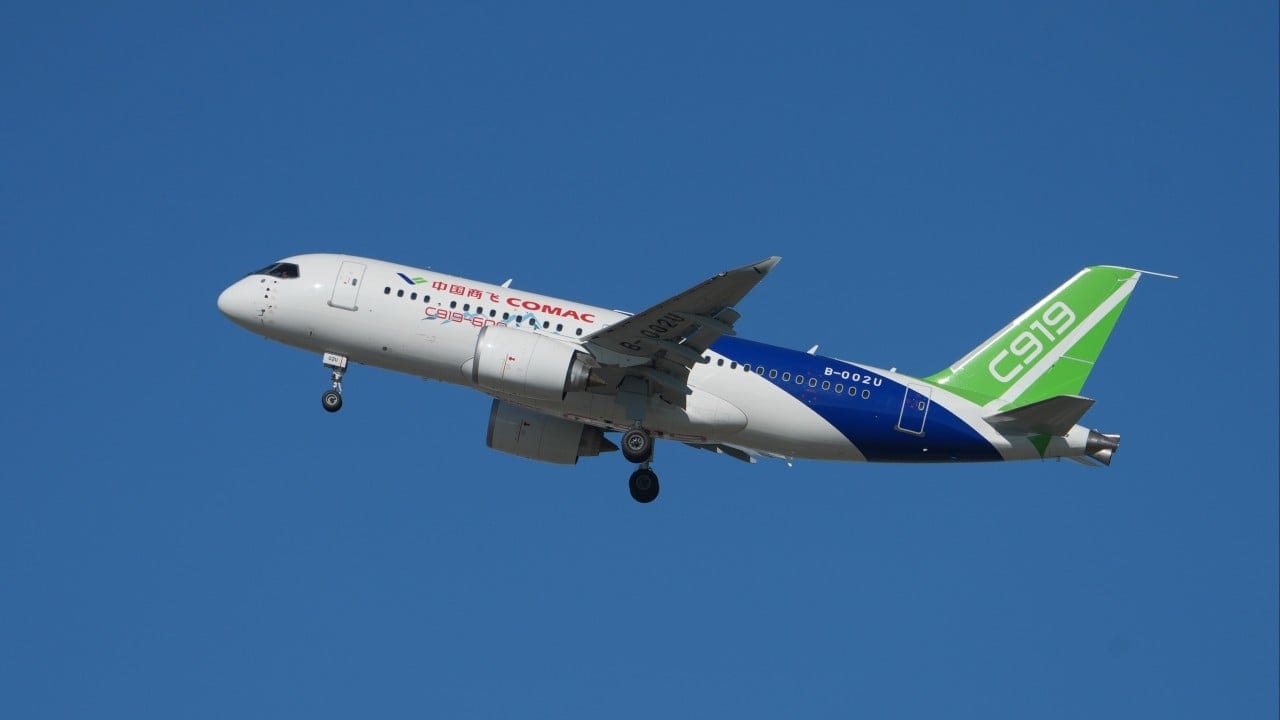
China is intensifying its efforts to localize the supply chain for its C919 passenger jet, a crucial step in its ambition to challenge the dominance of Western aerospace giants like Boeing and Airbus. The push to replace foreign-sourced components with domestic alternatives is driven by a confluence of factors, including geopolitical tensions and a strategic imperative for greater self-sufficiency in a critical industry.
The development of the C919, China's first large-scale domestically manufactured passenger aircraft, has been a long-standing national priority. However, its reliance on imported parts, particularly from Western suppliers, has been a persistent vulnerability. This dependence creates risks related to supply chain disruptions, trade disputes, and technological access.
To address these challenges, China is actively fostering its domestic aerospace industry. This involves significant investment in research and development, supporting local suppliers to meet stringent aerospace standards, and encouraging collaboration to build a robust ecosystem for aircraft manufacturing. The goal is not only to secure the C919's production but also to lay the groundwork for future advancements in China's aviation capabilities.