Key facts
- About 99% of Singapore's private residences are equipped with air conditioning units, the report said.
- Cooling accounts for 40% to 60% of a building's energy consumption in Singapore, according to studies cited in the report.
- Singapore's local building sector accounts for one-fifth of the city-state's emissions, the report said.
- The active chilled beam system at Paya Lebar Green cut energy use by more than 30% versus conventional air conditioning, its designers DP Architects said.
- At least 33 public and 14 private buildings had adopted alternative cooling technologies by mid-2026, Singapore's building authorities said.
- A 2024 government study found alternative cooling technologies could save the city up to 48% in energy.
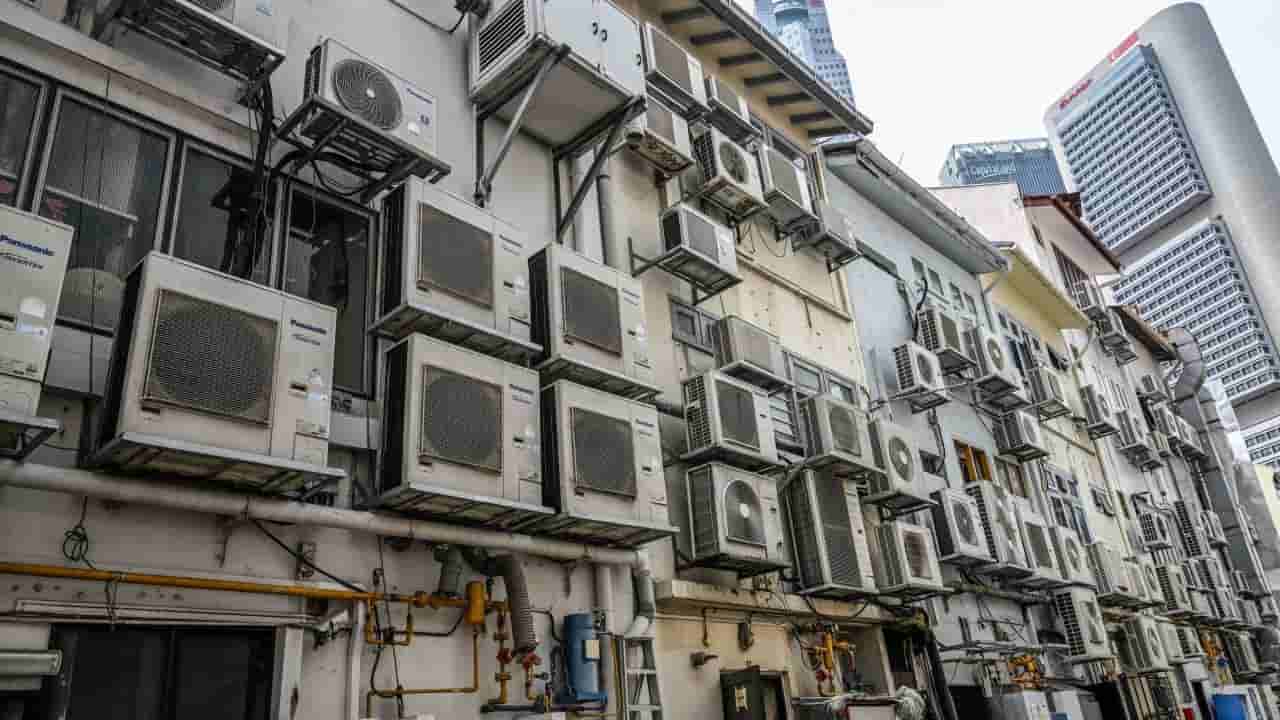
Singapore, long dubbed an air-conditioned nation, is experimenting with cooling alternatives from chilled beams to passive displacement to curb its energy use from air conditioning, according to a report published on November 1, 2026. The city-state has the highest per-capita air conditioner ownership rate in Southeast Asia, with about 99% of private residences equipped with cooling units. Singapore's local building sector accounts for one-fifth of its emissions, while cooling accounts for 40% to 60% of a building's energy consumption, according to studies cited in the report.
Some buildings in Singapore are adopting active chilled beams, which are perforated panels with cooling coils mounted on ceilings. At the eight-story Paya Lebar Green building in eastern Singapore, a chiller plant on the top floor cools water to 9C and pumps it into the coils while air is blasted through small nozzles inside the beams. The jets create a low-pressure zone that draws warmer air from the room below over the coils before it recirculates, keeping offices at 24C. The system cut energy use by more than 30% compared with conventional air conditioning, according to the building's designers, DP Architects. A similar system is in use at Singapore's ports authority maintenance building at Tuas Harbor.
The building also uses passive displacement cooling, which relies on natural airflow to reduce mechanical fans. Ceiling cooling coils chill the air, which sinks before rising back to the coils as it warms, cutting energy use and noise. Another alternative is radiant cooling, where water chilled to between 14C and 18C flows through pipes or panels and absorbs heat radiating from people or objects.
The push has government backing. A 2024 government study identified alternative cooling technologies as a key strategy that could save the city up to 48% in energy. By mid-2026, at least 33 public and 14 private buildings had adopted such technologies, Singapore's building authorities said. The city-state has a goal to achieve net-zero carbon emissions.