Key facts
- German Chancellor Friedrich Merz said the EU seeks deeper open market access with Southeast Asia and CPTPP members.
- Singapore Prime Minister Lawrence Wong said Singapore will push for progress on an ASEAN-EU free trade deal when it chairs ASEAN in 2027.
- Merz called on the EU to better coordinate existing bilateral trade frameworks with Singapore, Malaysia, Indonesia and India.
- Merz said next year marks the 50th anniversary of EU-ASEAN dialogue relations, offering an opportunity for a trade deal.
- Merz said de-risking from China did not mean decoupling, calling decoupling a mistake.
German Chancellor Friedrich Merz said on Tuesday, October 27, 2026, that the European Union is seeking to collaborate more deeply on open market access to counter restrictions on global trade, including with Southeast Asia and members of the CPTPP trade pact. He spoke during a visit to Singapore, according to The Jakarta Post.
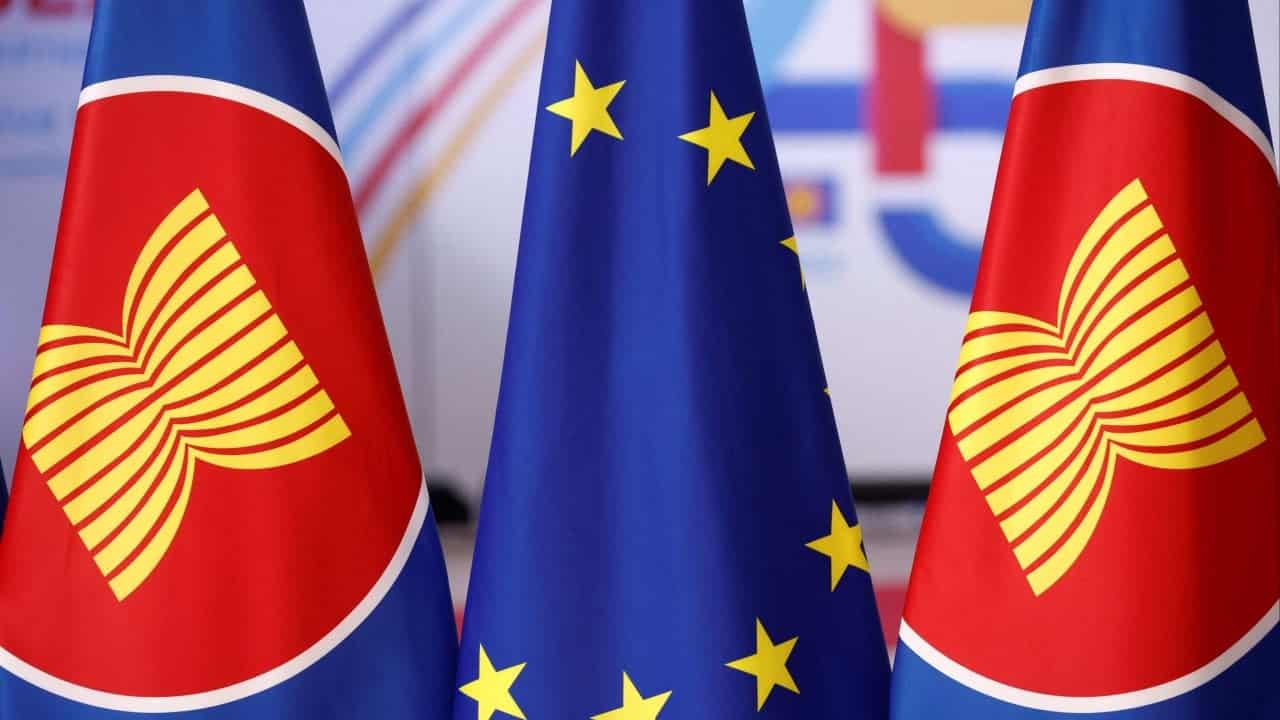
Singapore Prime Minister Lawrence Wong said his country, when it becomes chair of the Association of Southeast Asian Nations bloc in 2027, will push to make progress on an ASEAN-EU free trade deal. "We recognise that it will be challenging. It's complex, but we can also have some confidence in moving forward," Wong said about the ASEAN-EU agreement.
Merz said he has called on the EU to better coordinate its existing bilateral trade frameworks with partners like Singapore, Malaysia, Indonesia and India to "open up better opportunities for us and our businesses". The EU has bilateral FTAs with several ASEAN countries and negotiations are ongoing with other ASEAN members.
In a separate speech at the 49th Singapore Lecture, Merz proposed that the EU and ASEAN accelerate efforts to conclude a regional free trade agreement, noting that next year marks the 50th anniversary of dialogue relations between the two blocs. "I am in favor, provided we have enough in common to do it fast," Merz said, according to Lianhe Zaobao. He also called for a cross-regional agreement between the EU and CPTPP members, saying the two sides account for more than a third of global trade.
Merz reiterated that de-risking and diversification from China did not mean decoupling. "Decoupling would be a mistake. It would make us neither safe nor more prosperous," he said.