Key facts
- CLS suspended Argos satellite services to Russian clients, a CLS spokeswoman said, citing the evolving international context.
- Argos had tracked migratory birds in Russia's Far East, wild reindeer, bearded seals and Atlantic walruses.
- Conservationist Vyacheslav Alexeyev said tracking of Kroshik, a ringed seal released into Lake Ladoga, has stopped.
- Russia's Lake Baikal Foundation warned in October that the loss threatened monitoring of Baikal's seal and forest reindeer.
- Russia's Agency for Strategic Initiatives said in October it was in talks to develop a Russian alternative.
Russian researchers were cut off from the Argos satellite system in November 2026, the main system they have used for years to track wildlife across some of the world's largest wildernesses, Reuters reported. The system, run by French firm CLS, had been used to follow rare migratory birds across Russia's Far East, wild reindeer in northern forests, bearded seals in the White Sea and Atlantic walruses around Franz Josef Land.
A CLS spokeswoman confirmed the suspension of services to Russian clients, citing "the evolving international context and the arising constraints." The company did not say how many users it had in Russia, but its website says Argos was nearly the only system used by Russian scientists to study marine and terrestrial wildlife migration in northern regions.
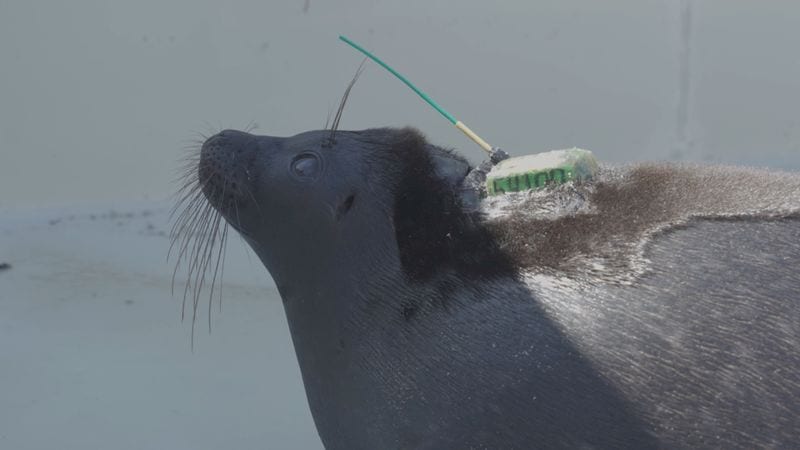
The cut-off ended public tracking of Kroshik, a freshwater ringed seal rescued as a pup near St Petersburg, cared for for a decade and released into Lake Ladoga in September. Conservationist Vyacheslav Alexeyev, who runs the shelter, wrote on the social media feed where he shared the seal's whereabouts that "we will know nothing more of Kroshik's adventures," and told Reuters: "All of that will now have to be stopped, so our feelings about it are extremely negative."
Philipp Maleko, a PhD candidate at the University of Wisconsin-Madison who has used Argos to study endangered shorebirds flying between Russia's Far East and Southeast Asia, said losing access "is really going to lead to lacking information on priority species and conservation and management actions." He said many birds depend on Russia's Arctic boreal ecosystems for reproducing and sustaining viable populations.