Key facts
- HERCA, WENRA and NORA said they represent 38 countries, including all EU countries, the US, Britain, Canada and Japan.
- Per Strand, head of HERCA and NORA, said Russian attacks had become deadlier in recent weeks, using drones with bigger payloads and more precise targeting.
- Strand said the worst case would be a nationwide blackout affecting Ukraine's nine producing nuclear reactors at the same time.
- Ukraine has four nuclear power plants; three are operating and provide some 80% of the power used this winter, according to the report.
- Zaporizhzhia, Europe's largest nuclear plant, is under Russian control, is not producing electricity and relies on external power to keep nuclear material cool.
- The IAEA said on Saturday that Zaporizhzhia has lost off-site power 27 times since the war began and has relied on a single off-site power line since late March.
Nuclear safety regulators representing 38 countries said on November 16, 2026 that the risk of a nuclear accident in Ukraine is increasing this winter and urged Russia to stop attacks on the country's power infrastructure. The joint statement was issued by HERCA, the Heads of the European Radiological Protection Competent Authorities; WENRA, the Western European Nuclear Regulators Association; and NORA, the Heads of the Nordic Radiation Safety Authorities. Reuters saw the statement ahead of publication.
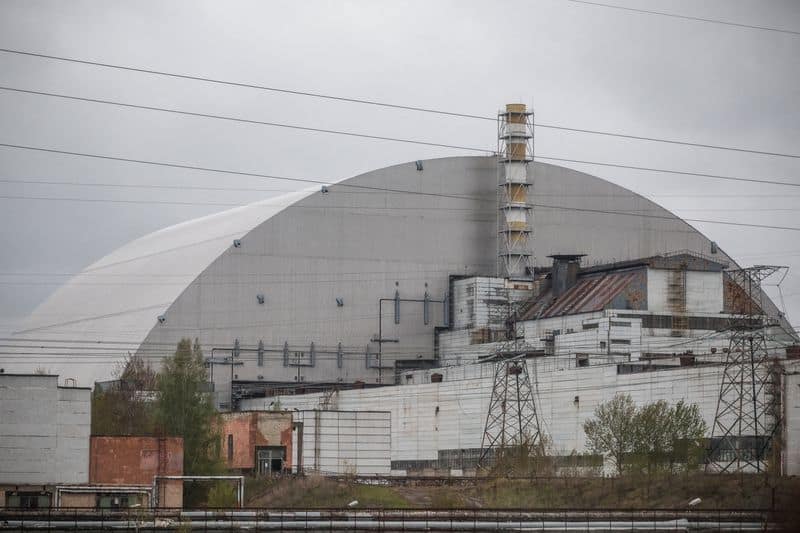
The regulators said Russia has stepped up drone and missile attacks on Ukrainian energy installations, including plants, power lines and electricity substations, a system already weakened after nearly five years of conflict. Their key concern is that without a stable electricity supply from the grid, Ukrainian nuclear plants will find it harder to keep nuclear material cool and avoid a meltdown. They said such an event could release radioactivity into the air as happened during the 1986 Chornobyl disaster, which spread iodine-131, caesium-134 and caesium-137 across parts of Ukraine, Belarus, Russia and northern and central Europe.
Per Strand, the head of HERCA and NORA, said in an interview that Russian attacks had become deadlier in recent weeks, for example by using drones that carry bigger payloads and are more precise in their targeting. "Because of this new tactic of the Russians, ... clearly the highest risk will be this winter for a nuclear accident," he told Reuters. He said the worst case would be a nationwide blackout of the Ukrainian power grid affecting the country's nine producing nuclear reactors at the same time. "Nine reactors at the same time with the potential of (radioactive) releases would be quite a severe situation," he said. He said the situation could be avoided if action was taken now and Russia was pressured to stop its attacks on energy infrastructure; otherwise European countries must work together on emergency preparedness.