Key facts
- The State Duma passed the bill in the first of three readings on November 17, 2026.
- The bill would on average double the lower and upper limits of fines for 29 administrative offences.
- Fines for producing and sharing extremist content would rise to 50,000 to 100,000 roubles for individuals, from 1,000 to 3,000 roubles.
- Duma speaker Vyacheslav Volodin said the measures should help improve public safety for citizens, TASS reported.
- OVD-Info said 1,393 people have faced legal action for their anti-war stance, including 337 incarcerated or in forced psychiatric treatment.
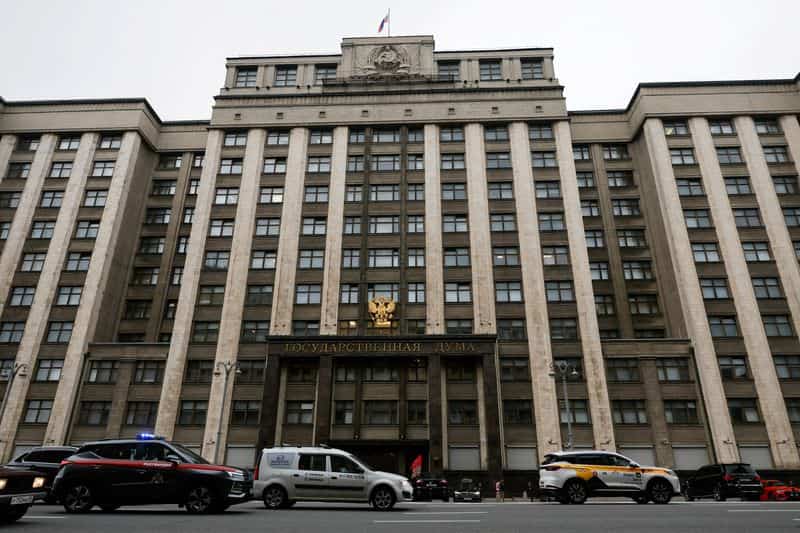
Russia's State Duma voted on November 17, 2026, in favor of a bill that would increase fines for a range of war-related and other minor offences, passing it in the first of three readings. The bill would on average double the lower and upper limits of fines for 29 administrative offences related to public order and safety.
The offences covered include holding unauthorized rallies, producing and distributing material the Kremlin deems extremist, and public actions aimed at discrediting the Russian Armed Forces, as well as smoking in certain areas and failing to properly register one's residence. Under the proposals, producing and sharing extremist content would incur a fine of between 50,000 roubles and 100,000 roubles ($600 to $1,206) for individuals, up from 1,000 to 3,000 roubles previously.
"All of this should help to improve public safety for citizens," the TASS state news agency quoted the Duma's speaker, Vyacheslav Volodin, as saying.
Moscow introduced sweeping wartime censorship laws soon after sending troops into Ukraine in February 2022, making it an offence to criticize the actions of Russian soldiers and labeling groups such as those linked to the late opposition figure Alexei Navalny as extremist. Reuters reported that Russian authorities have suppressed almost all public expressions of dissent against the conflict as the fifth anniversary of the war nears.
Russian rights group OVD-Info said 1,393 people have faced legal action for their anti-war stance since the start of the conflict, including 337 who are incarcerated or undergoing forced psychiatric treatment.