Key facts
- Representative Jared Huffman, ranking member of the House Natural Resources Committee, said the next COP delegation will be official.
- Representative Sean Casten said House oversight could seek restoration of promised US climate aid funding.
- Representative Yassamin Ansari said a Democrat winning the 2028 presidential election would help ensure the US can rejoin the Paris Agreement.
- Harjeet Singh of the Satat Sampada Climate Foundation said real change depends on whether Washington ends fossil fuel expansion at home.
- Brandon Wu of ActionAid USA said the House can deliver little to the UN process and sweeping climate legislation is unlikely in the next two years.
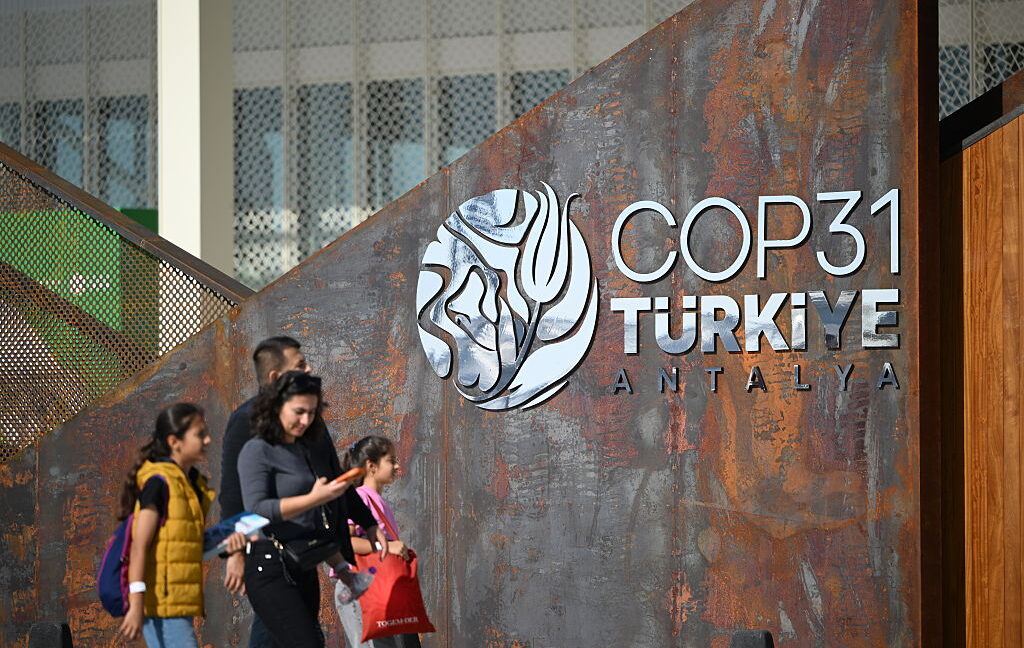
A delegation of Democratic US House members appeared at the United Nations COP31 climate change conference in Antalya, Turkey, on November 16, 2026, pledging to rejoin the international fight against global warming after their gains in the 2026 midterm elections.
Representative Jared Huffman, ranking member of the House Natural Resources Committee, said it is a "pivotal time" for US climate and energy policy. "The wrecking ball of Donald Trump and this out-of-touch administration, and the temporarily empty chair of the United States at this COP31, does not represent what the Americans want or need," Huffman said. He said the midterm election shows Americans have rejected efforts to "turn the United States into something like a petro-dictatorship."
President Donald Trump has pulled the United States out of the Paris climate agreement twice and is trying to quit the UN Framework Convention on Climate Change. Since Trump returned to the White House in 2025, the United States has had no formal government presence at the UN talks, but was informally represented by America Is All In, a coalition including local governments, businesses, faith groups, Native American tribes and universities.
Huffman said that in the past, US congressional delegations have attended the annual Conference of the Parties under both Democratic and Republican majorities. "The next time we're here, we will be an official congressional delegation led by the leadership of the House of Representatives," he told Inside Climate News. The US would still be excluded from formal government-to-government negotiations, but a congressional delegation representing the majority party could make a difference, he said.
"We want to take the best practices that we've heard from all of the global partners ... and craft them into good, solid climate policy once we get back to Congress," said Representative Lucy McBath.
The new Democratic majority in the House can also use its oversight authority to try to ensure that money the US has promised for climate aid and sustainable development is restored, said Representative Sean Casten. Casten said some European allies are "spending $500, $600 million per day more than before the United States attacked Iran" because of increased oil prices, and that stopping those hostilities could free up funding for climate efforts.
"We have lost [the] trust of the international community when it comes to climate," said Representative Yassamin Ansari. "I think it is a complete betrayal of our responsibility that Donald Trump has pulled us out of the Paris Agreement not once but twice." A Democrat winning the 2028 presidential election would help ensure the US can rejoin that agreement, she added.
Climate activists reacted cautiously. "We welcome the political shift in the United States that puts the brakes on the reckless dismantling of domestic green policies," said Harjeet Singh, director of Satat Sampada Climate Foundation. "However, here at COP31 in Antalya, the international community cannot afford to celebrate prematurely or suffer from collective amnesia." Singh said the US has a long history of obstructing climate negotiations across successive administrations and regardless of which party holds power.
Brandon Wu, with ActionAid USA, said the new Democrat-led House majority must reassert control over the budget and hold the Trump administration accountable for "likely illegal actions like dismantling USAID and gutting foreign assistance" funding approved by Congress. "What they can deliver to the United Nations process is extremely limited," he said, adding that sweeping new climate legislation or funding is unlikely in the next two years.