Key facts
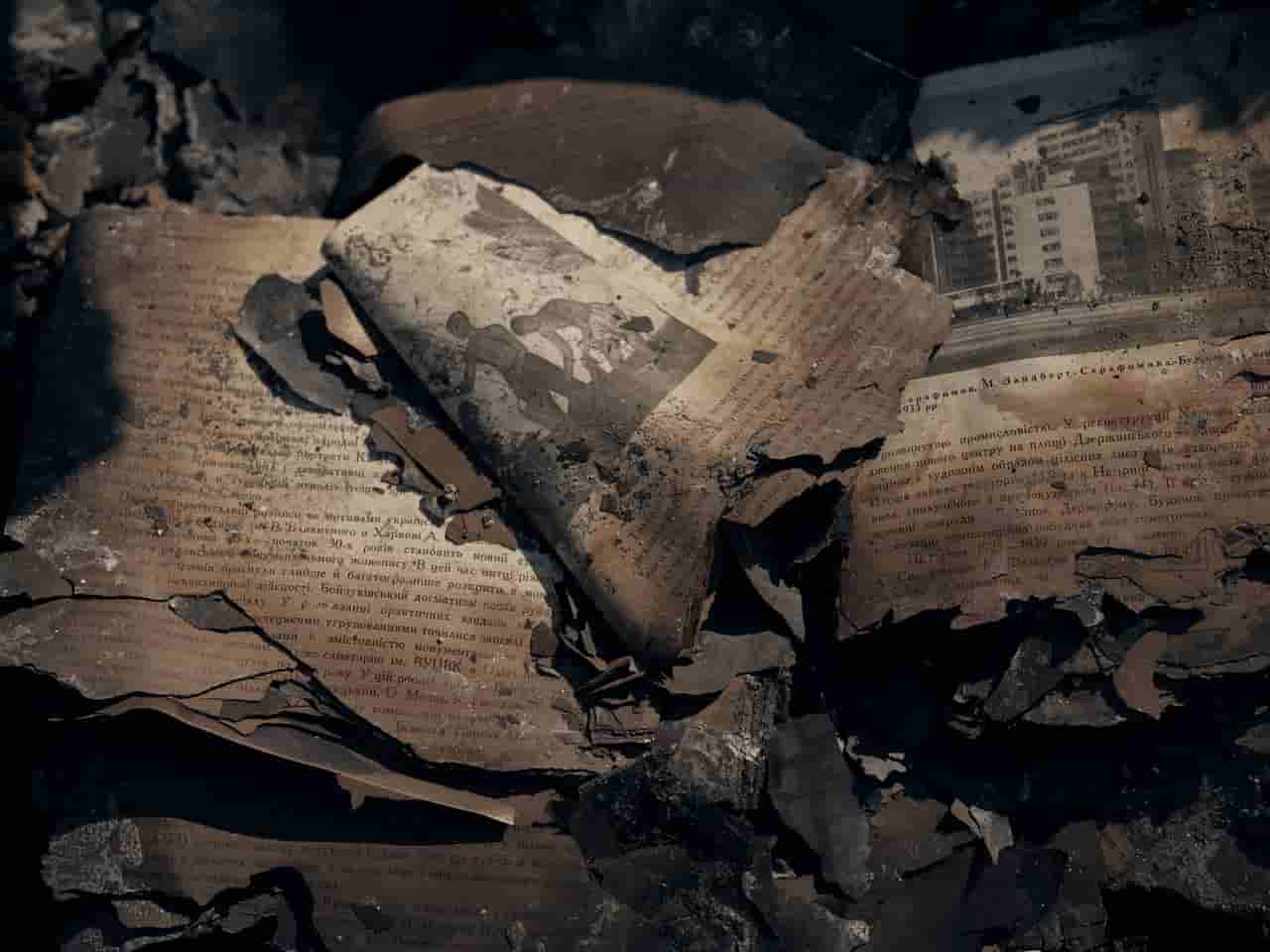
- Russian strikes in August 2026 destroyed over 12 million books and 10% of Ukraine's school textbooks.
- Historical Russian policies include bans on the Ukrainian language and suppression of cultural production dating back to the 19th century.
- The 'Executed Renaissance' saw the execution and deportation of many Ukrainian writers and intellectuals.
- Current Russian curricula in occupied territories remove Ukrainian language subjects and promote a pro-Russian historical narrative.
- Ukrainians are actively resisting through cultural preservation efforts, including buying books from targeted publishers.
Russia's ongoing war against Ukraine includes a systematic effort to destroy Ukrainian books and culture, a strategy with deep historical roots. This campaign, which has escalated with recent missile and drone attacks, aims to erase Ukrainian identity and memory, mirroring historical attempts by the Russian Empire and the Soviet Union to suppress Ukrainian language and literature.
Historical precedents include the 1863 ban on the Ukrainian language in publications by Interior Minister Pyotr Valuyev and the 1876 total ban imposed by Tsar Alexander II. Following the Russian revolutions, a generation of Ukrainian writers and intellectuals, known as the 'Executed Renaissance,' were executed or deported, and their works destroyed. Under Soviet rule, a russification campaign forced schools to teach in Russian and suppressed Ukrainian history, with libraries hoarding 'nationalist' works.
In the current conflict, Russian strikes have destroyed millions of books and a significant portion of Ukraine's school textbooks. In occupied territories, Russian curricula are being implemented, removing Ukrainian language subjects and teaching a pro-Russian historical narrative. Despite these efforts, Ukrainian printers and citizens are actively resisting by promoting book sales and preserving their cultural heritage, demonstrating a resilience that has historically thwarted attempts to erase their identity.