Key facts
- Iceland is a "critical outpost" for security and monitoring clandestine behavior, according to U.S. Secretary of State Marco Rubio.
- Rubio made the remarks during a visit to Reykjavik on Tuesday.
- The U.S. aims to increase its influence in the Arctic region.
- Iceland relies on NATO and a 1951 bilateral defense pact with the U.S. for security.
- The U.S. signed a security pact with Denmark and Greenland in late September to establish two new military bases.
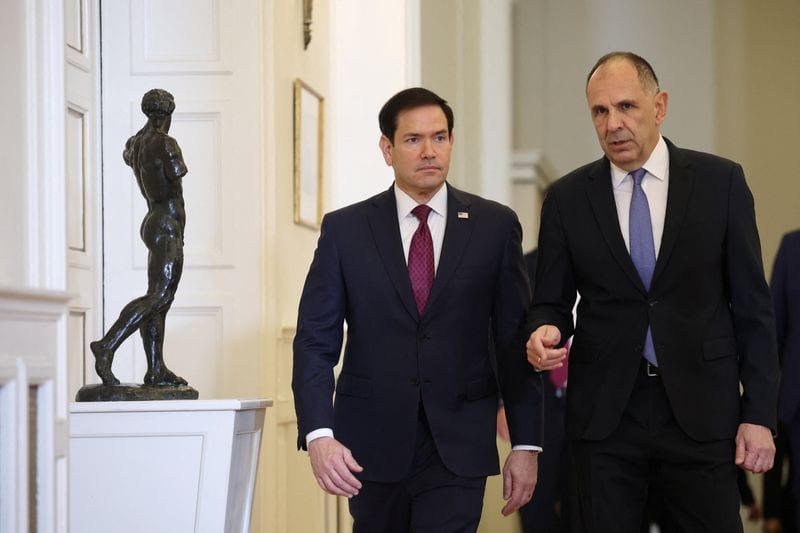
U.S. Secretary of State Marco Rubio declared on Tuesday that Iceland has long been a "critical outpost" for security, emphasizing its role in monitoring clandestine activities and deterring adversaries. Rubio made these remarks during a visit to Reykjavik, part of a broader U.S. effort to bolster its influence in the strategically important Arctic region.
His visit comes in the wake of a security pact signed in late September between the U.S. and Denmark and Greenland, which will permit Washington to establish two new military bases in Greenland, further integrating the autonomous territory into the U.S. sphere of influence. Rubio's comments highlight Iceland's regained status as a strategic player amid rising competition in the Arctic, despite its continued reliance on the U.S. for security.
Rubio met with Icelandic Prime Minister Kristrun Frostadottir and top diplomat Thorgerdur Katrin Gunnarsdottir to discuss topics including geothermal energy, data centers, and the pharmaceutical industry. The U.S. does not currently have a permanent base in Iceland but is seeking to consolidate its control over Arctic access routes, which are of interest to Russia and China.
The visit also follows a controversy in early September when then-President Donald Trump shared an AI-generated map depicting North America, Greenland, and Iceland as part of the United States, an image that Reykjavik deemed "wholly inappropriate." Gunnarsdottir stated on Tuesday that this issue has been resolved and welcomed the U.S. deal with Greenland, affirming Iceland's commitment to strengthening ties with Washington. Icelanders voted in August against resuming negotiations to join the European Union, having frozen such talks in 2013. Since its independence in 1944, Iceland has not maintained its own military, relying on NATO and a 1951 defense pact with the U.S. for its security.