Key facts
- Protesters clashed with police in Brussels on Friday during a national strike.
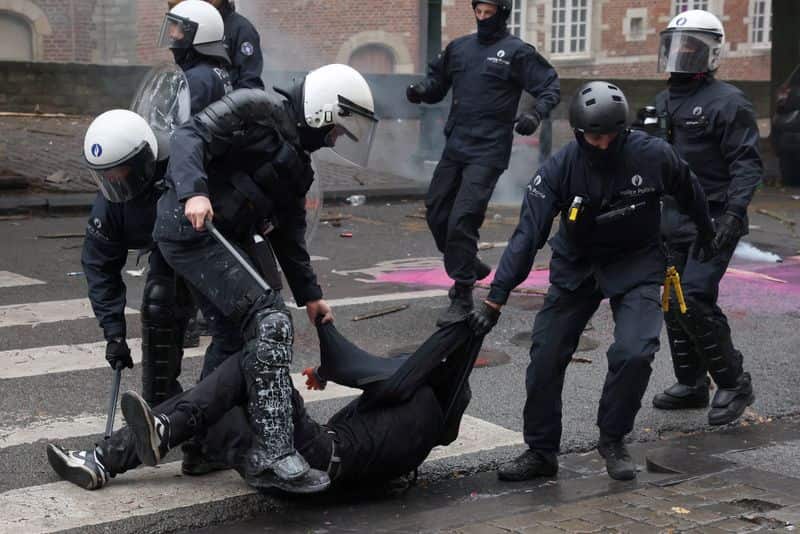
- Thousands marched peacefully, but a smaller group threw objects and set fires.
- Police used tear gas and water cannons to disperse protesters.
- 21 people were detained or arrested, including 13 minors.
- The strike disrupted public transport, air travel, schools, and childcare facilities.
- Unions oppose budget measures they say burden workers, pensioners, and low-income households.
Clashes erupted in Brussels on Friday between a small group of masked protesters and police during a national strike against planned government budget cuts. Thousands marched peacefully, but some threw objects and set fires, prompting police to use tear gas and water cannons. The strike, called by Belgium's two largest unions, disrupted public transport and affected schools.
Police reported that while the main march of around 30,000 people was peaceful, confrontations occurred near Brussels Central Station and in central Brussels. Groups threw bottles, bricks, stones, and fireworks at police, set fires, and damaged public property. Officers responded with water cannon and tear gas to disperse the crowds, leading to 21 detentions or arrests, including 13 minors.
The strike was called by the socialist FGTB/ABVV and Christian CSC/ACV unions, who oppose government budget measures they claim will disproportionately affect workers, pensioners, and low-income households in efforts to reduce the country's deficit. Prime Minister Bart De Wever had previously stated that such measures were necessary to avoid a debt and interest-cost spiral for future generations.
Student groups, whose protests began earlier in Liege and spread to Brussels, are also demonstrating against rising education costs, overcrowded classrooms, and reforms they believe will make higher education less accessible. Emilie L'Honneux, a 23-year-old student from Liege, expressed frustration, stating that students and workers are not being considered and are struggling.