Key facts
- French teenagers continued school blockades and marches on Thursday.
- The protests are in their third week.
- Education Minister Édouard Geffray invited student leaders for talks.
- 224 high schools were closed on Thursday morning.
- The agriculture ministry announced €2 billion in interest-free loans for farmers.
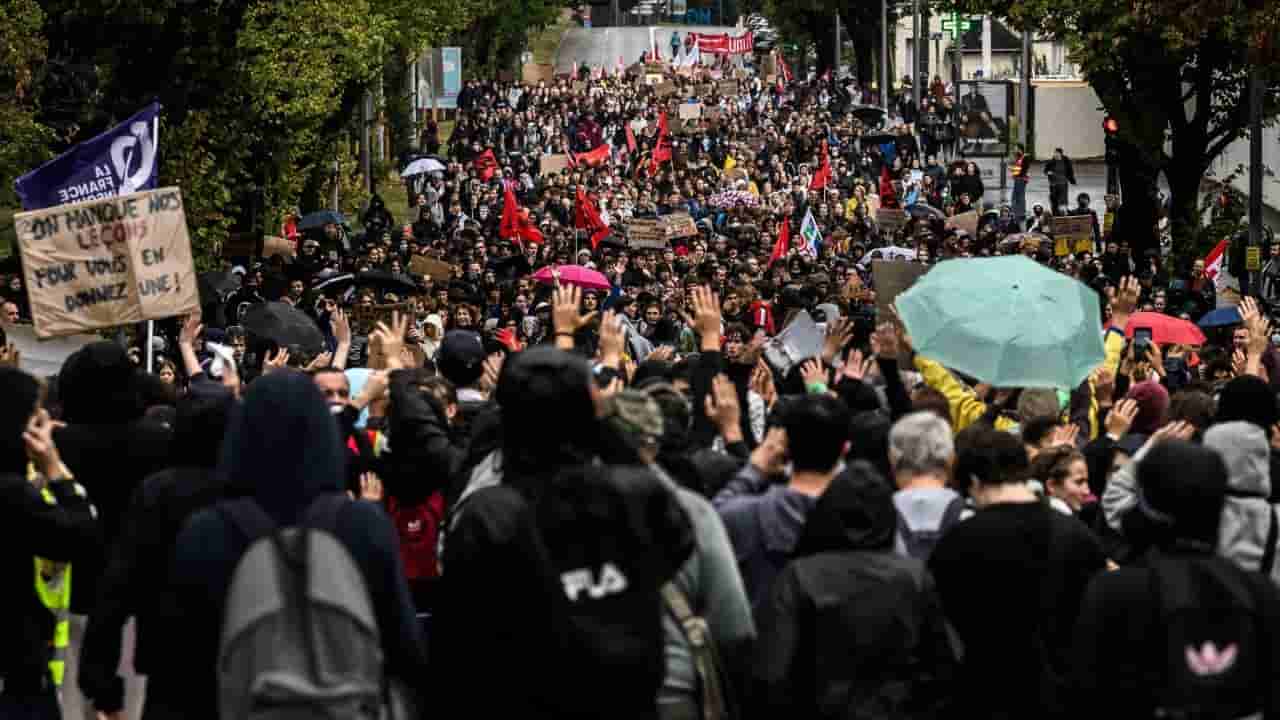
French teenagers continued to blockade high schools and march through cities on Thursday, as the protest movement entered its third week. The demonstrations highlight deep tensions in France between demands for investment in deteriorating public services and a government under pressure to reduce its debt and deficit.
Prime Minister Sebastien Lecornu pledged "concrete, quick and fully funded responses" by late October, but offered no specifics. Education Minister Édouard Geffray has invited the three leading high school student associations for further talks at the ministry later this afternoon. An online consultation platform for students has received over 43,000 responses in its first two days.
On Thursday morning, 224 high schools were closed, with 151 partially reopening. The number of closures had dropped by 30% compared to Wednesday. Marches were underway in Nantes, Rennes, Bron, Toulon, and Marseille, with a rally planned in Paris. Scuffles with police broke out near Helene Boucher high school in Paris, where protesters chanted and held banners. An English teacher, Charlotte Beaubeau, expressed solidarity with the students, describing the police response as heavy-handed.
The agriculture ministry announced €2 billion in interest-free loans for farmers, in addition to a €1.3 billion aid package announced last month. The protests have also spilled over into Belgium, with concerns about violence and property damage in cities like Liège, where over 200 arrests were reported this month. Belgian foreign minister Bernard Quintin stated that hard-left activists had infiltrated the protests in Liège.