Key facts
- French teenagers blockaded schools and prepared for further rallies on Thursday.
- Prime Minister Sébastien Lecornu pledged concrete government responses by late October.
- The government will release 10 million barrels of diesel from strategic reserves.
- The diesel release is expected to lower prices by €0.12 to €0.18 per liter.
- New measures for farmers are scheduled to be unveiled on Thursday.
- An online consultation platform for students has received over 43,000 responses.
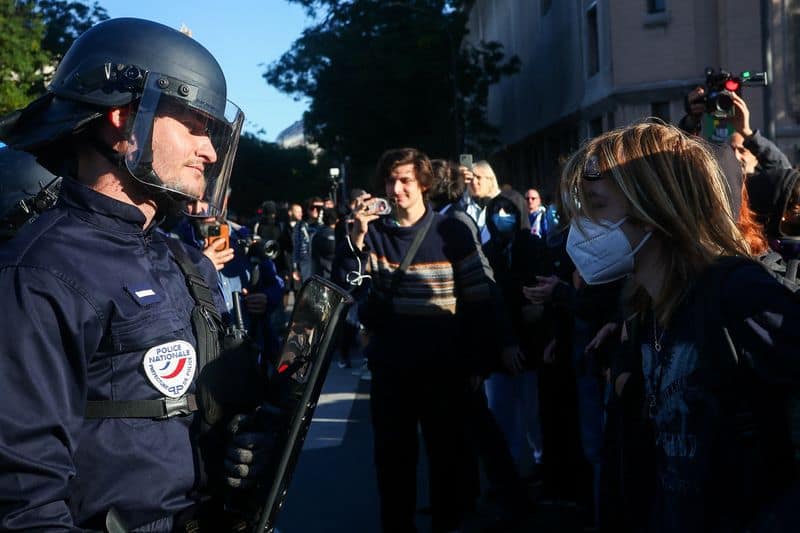
French teenagers blockaded some high schools and prepared to rally again on Thursday, demanding reforms and investments in public services. The protest movement, now in its third week, has exposed deep tensions between popular demands for investments in deteriorating public services and a cash-strapped government under pressure from bond markets to reduce its debt and deficit.
The education ministry reported that 224 high schools were closed on Thursday morning, a 30% drop from the previous day, with 151 partially reopening. Near Helene Boucher high school in Paris, protesters erected a barricade and scuffled with police.
Prime Minister Sebastien Lecornu addressed the nation late on Wednesday, pledging that the government would present "concrete, quick and fully funded responses" by late October, but offered no specifics. An online consultation platform set up for high-school students to express their frustrations had drawn more than 43,000 responses in its first two days.
Politicians' responses to the protests have been starkly polarized. Far-right frontrunner Marine Le Pen highlighted damage to schools and called for repair bills to be footed by protesters or their parents. Her hard-left opponent Jean-Luc Melenchon praised the protesters and denounced police brutality.
Finance Minister Roland Lescure told the BBC that "Our duty asμεν leaders is to listen to them," adding that there was a need to rebalance public spending between generations. Protests by students and teachers also took place in Belgium, Spain, and Portugal.