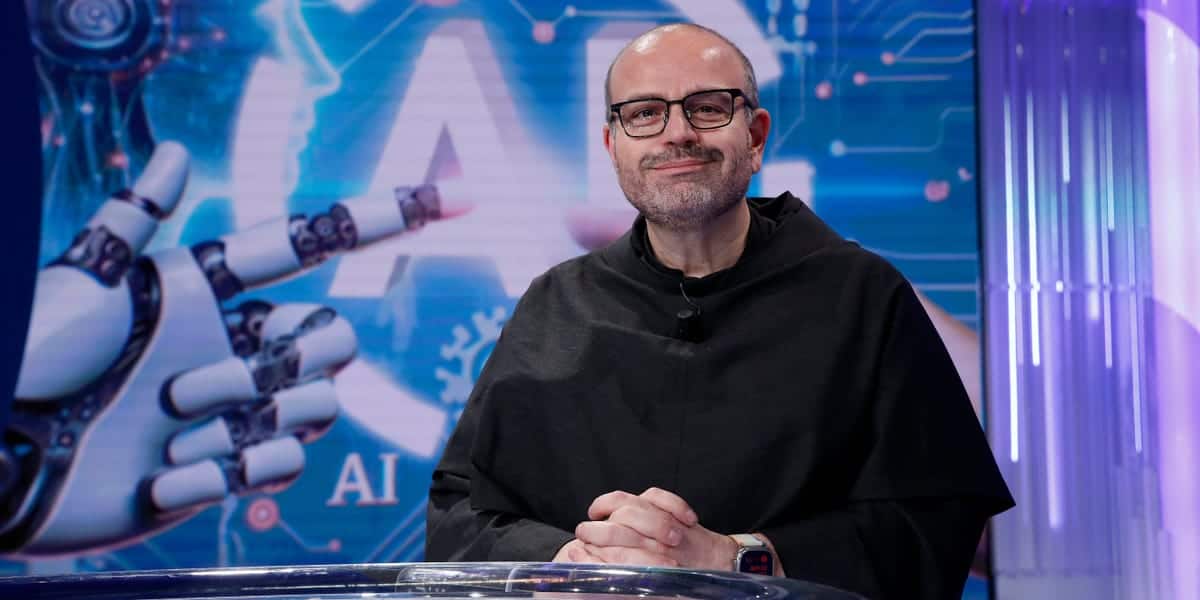
Paolo Benanti, a moral theologian who advises the Vatican on artificial intelligence, warned that AI technologies could be more detrimental to young people than addictions to substances like cocaine. In an interview with the BBC's "Newsnight," Benanti described AI as a "super manipulation tool" capable of causing "emotional bending" in children and young adults that could be far worse than drug addiction.
Benanti, a Franciscan friar and professor at Pontifical Gregorian University, is a key advisor to the Vatican on technology ethics and a member of the Pontifical Academy for Life. He stressed the need for protective measures, likening the situation to mandating helmets for scooter riders and calling for "brain helmets" to shield developing minds from AI's influence. He highlighted the "uneven relation of power" that allows tech leaders to "manipulate and control the most fragile brains."
His remarks come amid broader discussions about AI safety, with figures like Elon Musk, OpenAI's Sam Altman, and Anthropic CEO Dario Amodei advocating for a slowdown in development and the integration of third-party safety evaluators. Benanti called for international treaties to ensure AI serves humanity and specifically to protect the most vulnerable.
Pope Francis has made AI a significant focus of his pontificate, inspired by Pope Leo XIII's advocacy for workers' rights. In a recent encyclical, Pope Francis warned against the concentration of AI power and emphasized the need for the technology to be "disarmed, welcoming and accessible."
Concerns about AI's impact on youth are not isolated. A July survey by Deloitte indicated that half of parents are worried about their children's over-reliance on AI, with nearly 30% reporting their children already use generative AI for schoolwork. Research from MIT and Harvard Business Review has also suggested that AI use can potentially weaken independent thinking and lead to cognitive fatigue.