Key facts
- The judges did not grant consent for Swieczkowski's detention, the tribunal's decision showed.
- Prosecutors accuse Swieczkowski and former deputy Bartlomiej Sochanski of exceeding their authority at the tribunal.
- The National Bank of Poland said on Monday it was freezing the tribunal's accounts over uncertainty about authorized transfers.
- Justice Minister Waldemar Zurek said on X that the prosecutor's office can now bring charges against Swieczkowski.
- PiS deputy leader Przemyslaw Czarnek said the judges' decision was unlawful.
Judges of Poland's Constitutional Tribunal decided to strip Bogdan Swieczkowski, whom opposition lawmakers call the court's rightful president, of his immunity, the tribunal's decision made public on Wednesday, November 18, 2026, showed. The judges agreed the move on Tuesday but did not consent to his detention.
The decision opens the way to potential prosecution of Swieczkowski on charges including exceeding his authority. Prosecutors had requested the immunity waiver so he could face charges over unauthorized use of material from surveillance and classified information while he was national prosecutor between 2016 and 2022. Prosecutors also accuse him and his former deputy Bartlomiej Sochanski of exceeding their authority at the tribunal by stopping judges appointed by parliament from performing their duties.
Justice Minister Waldemar Zurek welcomed the move in a post on X, saying the prosecutor's office can now bring charges and that no one is above the law. Przemyslaw Czarnek, deputy leader of the nationalist opposition Law and Justice (PiS) party, said the judges' decision was unlawful.
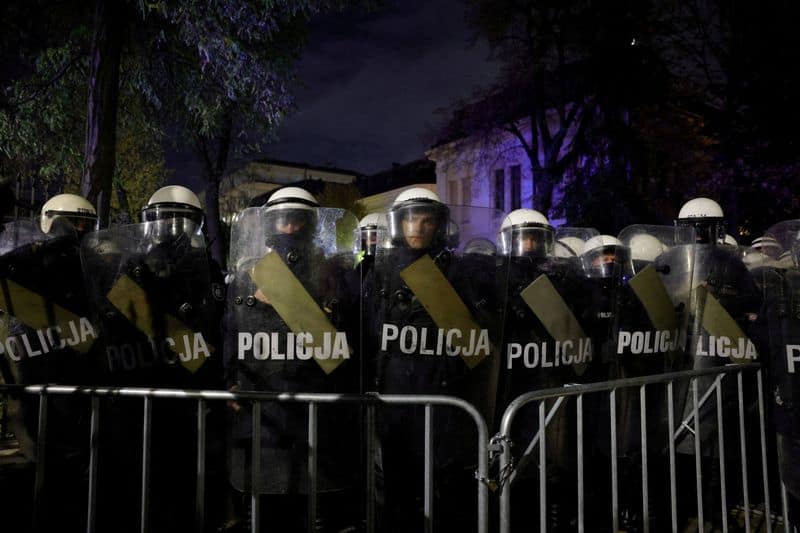
The dispute centers on the tribunal's composition and pits Prime Minister Donald Tusk's pro-European government against the nationalist opposition and its ally President Karol Nawrocki. In October, the tribunal said its longest-serving judge, Anna Korwin-Piotrowska, had suspended Swieczkowski, an appointee of Tusk's nationalist predecessor, and was now in charge of the court. Swieczkowski and his supporters say she had no authority to do so and accuse Tusk of mounting a coup. Protesters have been camped outside the court since that decision, with police guarding the building.
The National Bank of Poland said on Monday it was freezing the tribunal's accounts because it could not establish who was legally authorized to make transfers from them. The wider dispute dates to 2015, when the then-PiS government sought to appoint judges to seats already filled by the previous government, arguing the outgoing centrist government had rushed to fill positions before losing power. Its nominees gained a majority on the tribunal, while critics at home and abroad said the court no longer met the standards of an independent and impartial tribunal established by law.