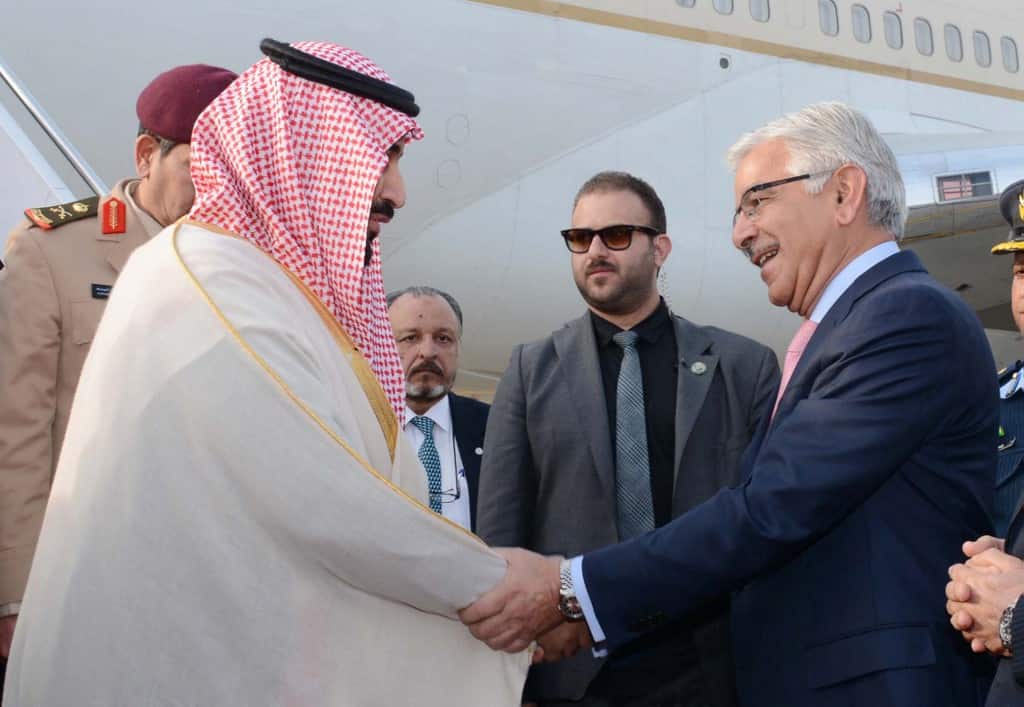
Key facts
- Pakistan's defence minister Khawaja Asif called for a united military front against Israel.
- Asif described Israel as a threat to the Muslim world.
- Pakistan, Saudi Arabia, and Turkey signed a landmark Joint Defense Agreement.
- The agreement states an attack on one is an attack on all three signatories.
- Pakistan's foreign minister clarified the pact is defensive and open to other nations.
Pakistan's defence minister, Khawaja Asif, has called for a unified military response from Muslim nations against Israel, which he characterized as a significant threat to the entire Muslim world. His remarks followed the signing of a landmark Joint Defense Agreement between Pakistan, Saudi Arabia, and Turkey.
Asif referenced historical context, including the Balfour Declaration, and stated that the creation of Israel was illegitimate. He asserted that the situation necessitates a collective confrontation by the Islamic world until the issue of the Palestinian people is resolved according to their aspirations. He further commented that Israel's "anti-Palestinian and anti-Islamic nature" is inherent and would not change regardless of the political leadership in power.
The Mecca Joint Defense Agreement, signed by Saudi Crown Prince Mohammed bin Salman, Turkish President Recep Tayyip Erdogan, and Pakistani Prime Minister Shehbaz Sharif, aims to deepen security cooperation amid heightened regional tensions. Pakistan's Foreign Minister Ishaq Dar stated on Sunday that the agreement is "purely defensive in nature" and open to other nations willing to uphold its principles and resolve differences peacefully. The agreement stipulates that "any armed attack against any one of the three states shall be regarded as an attack against them all," consistent with the right of self-defense under Article 51 of the U.N. Charter, according to Dar.
Defense analysts cautioned against viewing the agreement as equivalent to NATO, despite its collective-defense provision. Abdullah Khan, an Islamabad-based defense analyst, noted that the agreement should not be interpreted as being directed against Iran or any other specific country.